June 2022 FloridAgriculture eNewsletter
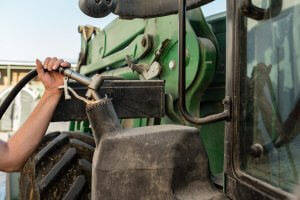
A question that is on the mind of many Florida farmers and ranchers is “How do I remain viable with the never-ending costs of inputs”? Near the end of 2021, many conversations on and off the farm were centered on rising fertilizer costs and the availability of inputs necessary for production. Now, just six months into 2022, record-breaking fuel prices have been added to the mix.
It is critical to note that increased prices of goods sold does not guarantee higher profit margins for any business. With increased costs and lack of availability, farmers and ranchers are struggling to maintain existing profit margins and meet production goals.
Buck Carpenter, a sixth generation perennial peanut hay farmer and cattle rancher from Madison County, shared, “This inflated economy is severely impacting my family operation. Last week, I purchased fertilizer at $2,000 per load compared to this same time last year when I paid only $800 per load.”
In addition, Florida agriculture relies heavily on refrigerated transportation to transport food products, such as milk and fresh vegetables, as well as heavy equipment to conduct work each growing season. Fuel is a necessary cost for a farm enterprise.
According to the U.S. Energy Information Administration, diesel prices have risen more than 37% in just 10 weeks since Russia’s invasion of Ukraine, setting a new nominal record of $5.62 a gallon in May. What is being done to ease this burden on Americans and how are farmers and ranchers being taken into consideration?
The Biden Administration has lifted the summer sales of E15 for all grades of gasoline. Retailers are now required to sell summer-blend gas from June 1 to Sept. 15 to help drive down prices at the pump. However, projections from the U.S. Energy Information Administration still signal another increase in gas prices to $6.20 per gallon in August.
Under consideration is the release of one million barrels of diesel fuel from federal reserves to help drive prices back down and prevent outages in areas like the East Coast. To many farmers like Carpenter, who drive diesel trucks and use diesel fuel for equipment, this could prove to be a positive, but short-term solution.
Carpenter said he regularly fuels three one-ton trucks and a fleet of working tractors. He stated, “Increased inputs and fuel prices are impacting not only my bottom line but also our consumers who are the end users. If fuel becomes less available that will lead to severe ramifications for consumers. Releasing barrels of diesel from federal reserves will at least keep supply adequate. From there, we can work on reducing prices by implementing immediate innovations, whether through agency cost-share programs or other methods.”
Carpenter went on to share a valuable piece of wisdom that he is applying to his efforts to combat these ongoing issues, “In these desperate times, we have to help each other prevail or we won’t have a future. I am blessed to farm every day amidst all of the endless challenges. Our farmers are relentless optimists and that is where I hang my hat.”
 Cody and Courtney Darling
 The Florida Farm Bureau’s state board of directors approved a $24,500 scholarship a year (for two years) to provide a student the opportunity to pursue a Bachelor of Science in Agricultural Studies at Warner University.
 It’s an understanding she uses regularly as she advocates for 134,000 members who can’t legislate from their farms and ranches.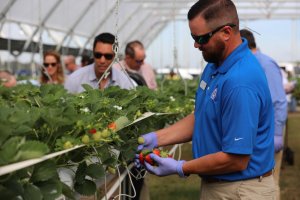
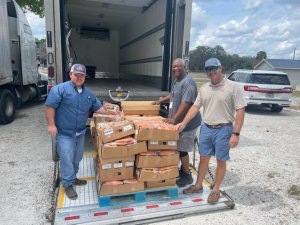 Highlands County Farm Bureau is a highly respected organization throughout its local communities because of the exemplary efforts taken to care for those in need. What started out as one simple idea has now made an enormous impact on local families in Sebring and the surrounding areas.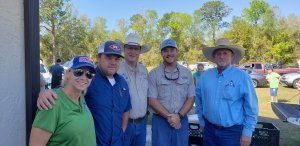
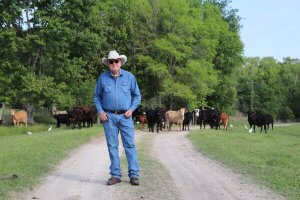 Jim Farley is a multi-generational cattle rancher from Clay County. He learned at a young age how to transform an essential job into a thriving and fulfilling career. Shortly after receiving his degree in Ranch Management from Texas Christian University and marrying the love of his life in 1969, Farley Cattle Company was born. During their 53 years of marriage, Jim and Jean have worked together to build a successful cattle, hay and timber business that spans more than 7,000 acres in North Florida.
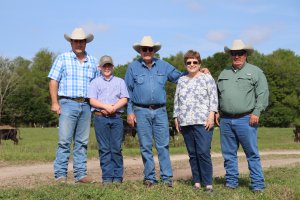 Farley is an advocate for loving what you do. His career has been dedicated to growing a successful business with hopes that his sons desire to take it over. His only request for his sons is to be happy with the path they choose. Farley firmly believes happiness is key to a long-term career and one that you won’t want to retire from.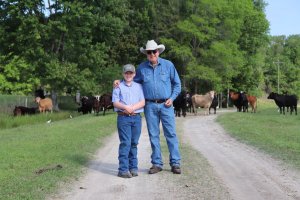
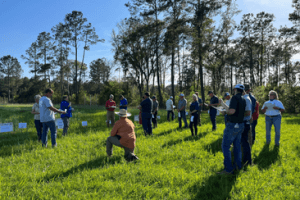 The UF/IFAS NFREC – Suwannee Valley hosted a free event on March 29, 2022 on fertilization strategies and pasture management. The group toured cool season plots and saw four varieties of bahiagrass while hearing from Columbia County Extension Agent Paulette Tomlinson and Professor of Forage Breeding and Genetics, Dr. Ann Blount.
 John Dooner