
February 2026
Maybe you’ve heard piecemeal about incentives available to keep your farm a farm.
Commissioner Simpson is the loudest and proudest champion for conserving ag land through the Rural and Family Lands Protection Program. There are federal programs that fund agricultural conservation easements, too. In a few places, a non-profit or your Board of County Commissioners might offer incentives to keep your land in agriculture.
How do you find the right one for you? Do you have to choose just one? Can you sign up your grazing land and then plant citrus trees on it?
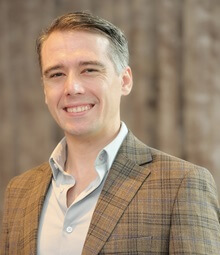 It’s a high-stakes decision about whether to sell your development rights. That’s why Dr. Nathan Palardy of our Food and Resource Economics Department (FRE) works on developing and disseminating information you need to make the right decision for you.
Last year, Palardy and several FRE colleagues published Agricultural Conservation Easement Programs: A Quick Reference Guide. In six pages, you can find multiple program descriptions side by side so you can compare.
If you want an old-fashioned hard copy, or just have questions concerning easement programs, reach out to Palardy at [email protected].
Palardy’s academic department runs our annual policy conference. At the 2024 conference, your policy director Geoffrey Patterson asked Palardy if he did work in the ag conservation area. Palardy’s answer: I do now.
Over the next few months, he compiled and organized from disparate sources the technical info about easements for ag land and presented it in easy-to-understand terms. This guide is your starting point. You’re his main audience.
But you’re not his only one. He’s also busy offering his newly developed expertise to county government officials. In January he traveled to Walton County (at the county Farm Bureau’s invitation, of course!) to educate county commissioners considering whether to invest in a local agricultural conservation easement program.
And he’s been working to set up training for county agents to make them easement-literate. With the right training, the agent who tests your soil or talks freeze protection with you might also help you find programs to keep your land in agriculture that you hadn’t heard about before.
In some ways, Palardy is the right guy in the right place at the right time. He’s fluent in policy, has established connections with county commissioners statewide and feels the loss of agricultural lands personally.
You see, Palardy grew up in a rural Georgia county and saw peanut farms and pastures turn into roads, subdivisions and strip malls. You have every right to sell your development rights and your land. We just don’t want you to sell land you really want to keep because you don’t think you have a choice. Palardy’s guide, and his very academic discipline, agricultural economics, is about choices.
In other ways, Palardy is much like his UF/IFAS faculty colleagues. They listen to you and to your staff. You asked about this important issue, and he did the legwork to find answers for you.
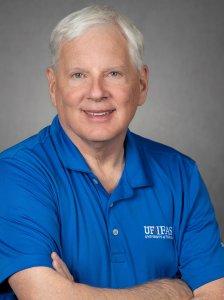 By J. Scott Angle
[email protected]
@IFAS_VP
Scott Angle is the University of Florida’s Senior Vice President for Agriculture and Natural Resources and leader of the UF Institute of Food and Agricultural Sciences (UF/IFAS).