
March 2026
Almost everything we do at UF/IFAS contributes to keeping working lands working.
We do it with a laser focus on keeping you profitable.
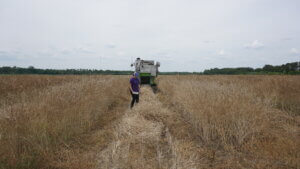 The combined threats of rising input costs, volatile markets, extreme weather and pests can threaten farmers’ bottom lines and make it more economically attractive to plant that final crop: rooftops.
We can’t control weather or the price of fertilizer. But our science can help mitigate the effects of hurricanes and freezes and increase efficiency of fertilizer use.
We de-risk change. Our researchers try it first. And then our Extension faculty share it with you.
When you have money, you minimize risk by diversifying where you put it – different asset classes. But you can also benefit by diversifying how you make money. That’s where we come in.
UF/IFAS is developing strong science that demonstrates the benefits of diversifying farming. But we know there’s a risk of transitioning from what has worked up to now into diversified farming—winter cover cropping, for example. Only about 5% of the 4.1 million acres of row crops in Florida, Georgia and Alabama grow winter cover crops.
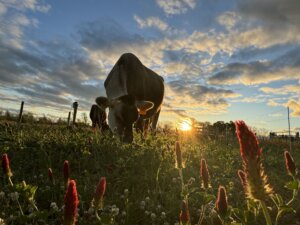 That’s why we’ve launched CHEERS—the Conservation Hub for the Economic Empowerment of Rural Stakeholders. CHEERS brings farmers, commodity groups, agencies, and industry together to de‑risk diversification. It focuses on year-round rotations. Jose Dubeux of our Department of Agronomy , along with a team of other faculty experts, aims to turn a conservation practice like cover cropping into an income stream by doing it with forages for winter grazing and other crops.
The premise is straightforward: if practices like cover crops, soil‑building rotations, or carbon‑smart management pencil out, we’ll see them spread across thousands of acres and keep more farms viable. Florida Farm Bureau recognized the value of this approach with a strong letter of support as Dubeux and his team secured federal funding to investigate.
To help farmers make those practices pencil out, we partner with agencies like the United States Department of Agriculture’s Natural Resources Conservation Service and the Florida Department of Agriculture and Consumer Services to develop cost-share models based on our science. Even these incentives may not be enough, so we have done some research aimed at developing payment-for-ecosystem services models – compensation for farmers providing wildlife habitat, flood protection, biodiversity and carbon sequestration.
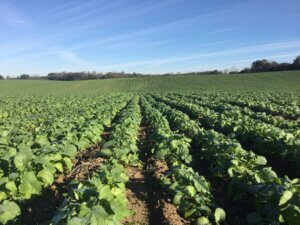 Statewide mapping shows Florida could lose about 2.2 million acres of agricultural land by 2070 if today’s development patterns continue. The biggest hits would come to grazing lands that anchor our beef cattle and dairy industries as pasture turns to pavement.
There’s opportunity to bend this trend. For example, only about 16 percent of Florida’s agricultural acreage is protected through federal, state, local or private conservation programs. Last month I highlighted the work of our Food and Resource Economics team in building a plain‑English Quick Reference Guide summarizing these programs that pay for development rights while keeping land in production.
We are committed to helping keep farms profitable. By doing so, we keep Florida farms on Florida lands.

By J. Scott Angle
[email protected]
@IFAS_VP
J. Scott Angle is the University of Florida’s Senior Vice President for Agriculture and Natural Resources and leader of the UF Institute of Food and Agricultural Sciences (UF/IFAS).