Tag Archives: FloridAgriculture eNewsletter

Ag Talk with Jack Payne

[email protected]

@JackPayneIFAS

By Jack Payne

Jack Payne

Late last year I called Kenneth Parker to ask a favor. I thought a lot about it before I dialed, because I knew his answer would be yes. It always is.

I needed a new Florida delegate to a national grassroots council that converges on Washington, D.C. to go to bat for land-grant universities. At first Kenneth said he did not know what I was talking about, but that the other two Florida delegates sounded like good company, so count him in.

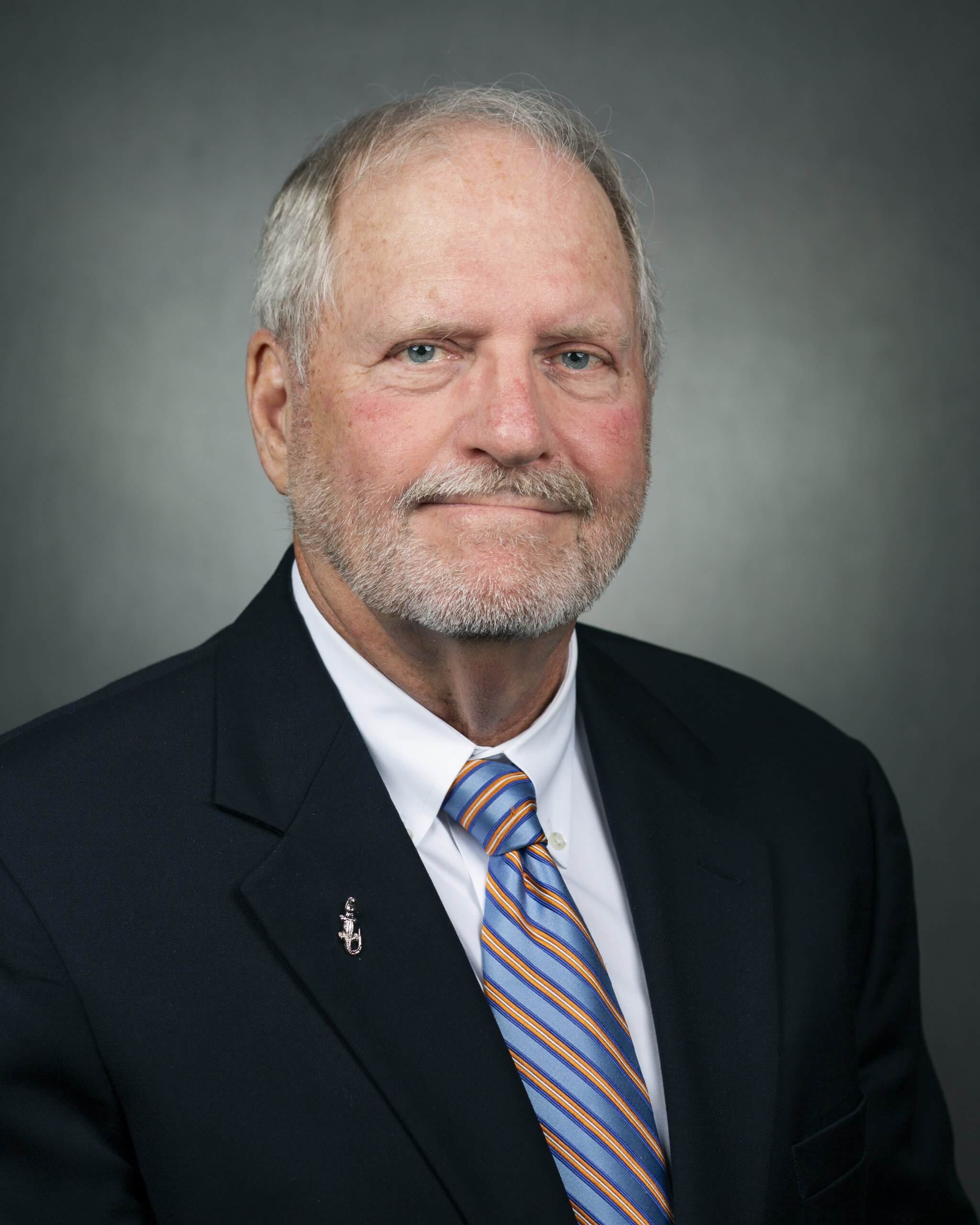
That is typical Kenneth Parker for you. As Farm Bureau members, you may know him best as former president of the Hillsborough County Farm Bureau and a regular at the annual convention. But Kenneth transcends a single association or commodity. He basically does whatever he can for Florida agriculture.

Florida Ag Expo 2019 held at the at Gulf Coast Research and Education Center (GCREC)

He brings to that service an appreciation for the science that underpins your

success. For years, Kenneth has worked to strengthen the University of Florida’s Institute of Food and Agricultural Sciences and help us understand industry needs.

Just a month or two before he accepted my request to serve as a Council for Agricultural Research, Extension, and Teaching (CARET) delegate, he had agreed to lead one of our stakeholder advisory groups, the Florida Agricultural Council, as its new president. In 2018, he said yes when we asked him to join SHARE Council, which helps garner philanthropic support for UF/IFAS.

Kenneth established early in his tenure as the executive director of the Florida Strawberry Growers Association his continuing support of the association’s commitment to covering the first few years’ salary for a UF/IFAS strawberry breeder with an expertise in genomics.

That allowed us to essentially have Dr. Seonghee Lee audition for the job. He is since become indispensable to Vance Whitaker’s strawberry breeding team.

Kenneth stood up for me at times when I had to make tough decisions. I have publicly acknowledged him in the past, like in 2014 when UF/IFAS honored FSGA as its industry partner of the year.

As I approach retirement, and I reflect on the contributions of our many supporters, Kenneth stands out. Because he did so much, and because he did it with such kindness and gentleness, Kenneth made me want to do my job better.

I will bet Judi Whitson in your Hillsborough County Farm Bureau office would say the same thing. So would the instructors in Plant City. So would the plant breeders in Wimauma. Soon enough, I expect, so will his peers at SHARE, CARET and the Florida Ag Council.

That means they will all do a better job for you.

Jack Payne is the University of Florida’s senior vice president for agriculture and natural resources and leader of the Institute of Food and Agricultural Sciences.

Grassroots List Connects Farms with Consumers

FloridAgriculture eNews | May 2020

When the COVID-19 pandemic forced businesses deemed non-essential to shut down, disruptions in the food supply chain created a domino effect across agriculture. Florida farmers and ranchers faced severe challenges because key markets and distribution channels were closed.

The heart and determination of Florida Farm Bureau Young Farmers and Ranchers is unmatched to any young group of millennials. These qualities appeared in a response to the crisis. The instinct and passion of one Hardee County Young Farmer and Rancher, Kalan Royal, kicked in.

It all started after Royal received a phone call from fellow YF&R member Samantha Dailey of Marion County asking if he knew of any farms that were selling directly to the public. Wheels were set in motion to develop a grassroots direct to consumer product list.

“Knowing the struggles that American farmers and ranchers already faced pre-COVID-19 with trying to get their products sold and remain in business another year to keep the population fed as they compete against unfair competition from foreign producers, I knew I had to get as many farms on this list as possible,” said Royal. “The state’s farmers and ranchers now were in need of help more than ever in getting their products sold.”

“I kept researching and gathering as much information as I could get my hands on to help out those who give so much of themselves to provide food for this country,” added Royal. “As a result of Samantha prompting me to create a list and valuable input from FFB District 8 Field Representative Eva Webb, we were able to come up with an extensive list to help both consumers as well as farmers and ranchers.”

The grassroots farm to consumer list contains more than 250 farms and produce stands across the Sunshine State that are selling fresh produce and meats direct to consumers and is available on the FFB website.

Since the YF&R list has been created, a number of farm to consumer lists have been made available to the public, including the Florida Department of Agriculture and Consumer Services Florida Farm to You initiative that connects consumers directly to farms. Producers are able to submit available products via the website and consumers can search by county for various commodities.

The United States Department of Agriculture’s Farmers to Families Food Box program was also recently put into motion to assist agriculture and families in need.

Farmers interested in getting their products listed on various websites can visit the Florida Farm Bureau COVID-19 Resource page for available links.

Ag Talk

April 2020 FloridAgriculture e-Newsletter

Jack Payne
Jack Payne

By Jack Payne
[email protected]
@JackPayneIFAS

The Coronavirus doesn’t stop the need to feed. In fact, the run on supermarkets as I wrote this in mid-March demonstrates how demand for food spikes during a crisis.

This is a moment (maybe a months-long “moment”) for agriculture and agricultural science to shine. We have a wealth of experience as few other sectors do in navigating a crisis — natural disasters, climate variability, market fluctuations, freezes, diseases, pests and other threats.

Just as the food supply you deliver is not interrupted by the Coronavirus, neither is the science you rely upon to inform your decisions.

The women and men of UF/IFAS showed extraordinary effort in taking early action to keep the Coronavirus from sidelining science. Their beat-the-clock hustle ensured the continuity of agricultural science before restrictions on travel, public gatherings or even showing up at the office could threaten to shut down their work to sustain Florida agriculture.

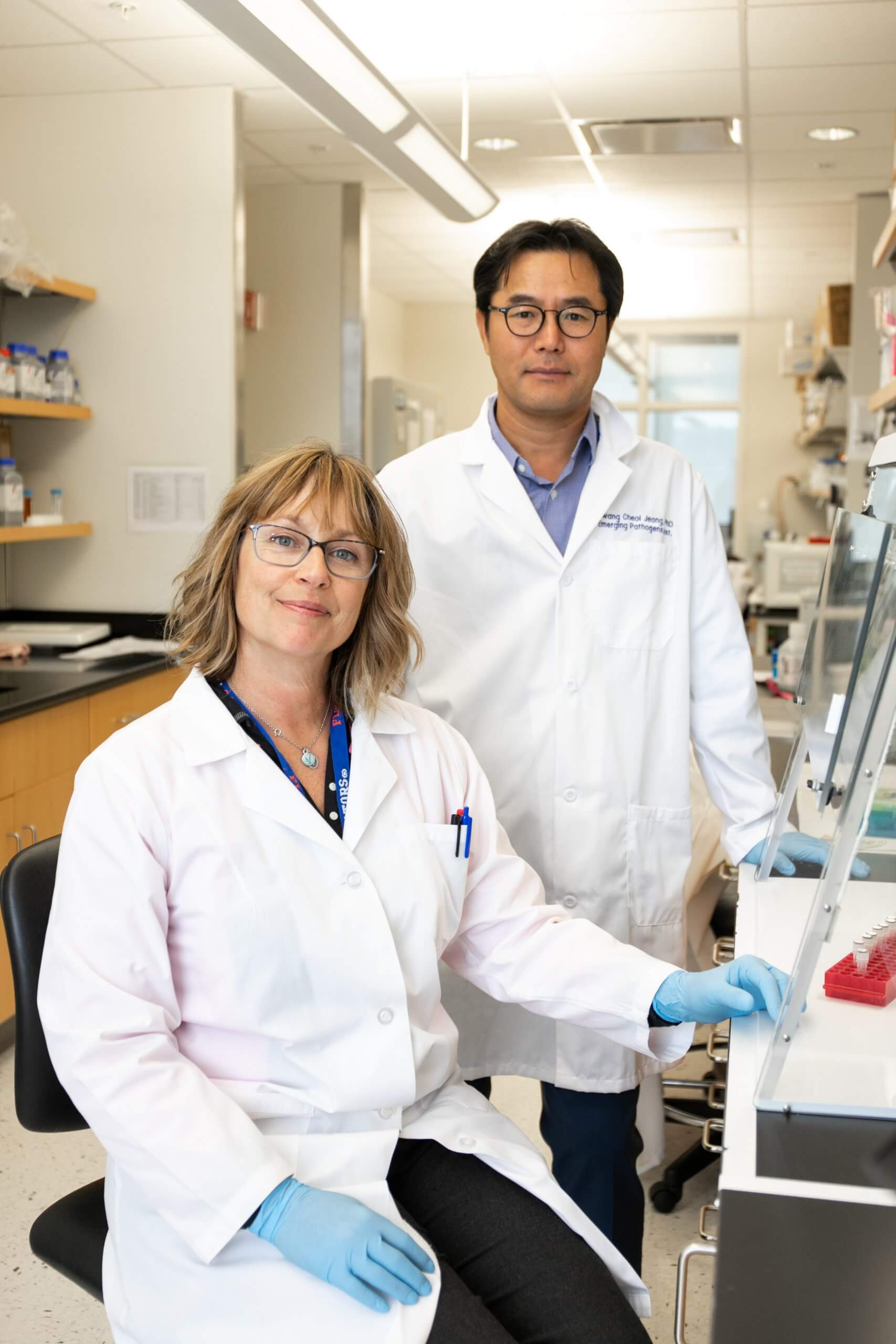
KC Jeong & Samantha Wisely

One of the most extraordinary responses was the darn-near-instant transformation of teaching. Our instructors, administration and instructional technology professionals took classes attended by 6,000 students in the College of Agricultural and Life Sciences and put them all completely online in days. This keeps students on track to graduate on time and prevents gaps in the education they’ll need to be productive 21st century citizens.

These are 6,000 potential future employees. At the very least, they’re 6,000 present and future customers who will be ag ambassadors who can tell friends, family, co-workers, fellow worshippers and strangers where their food comes from.

Lauren Diepenbrock feared that as the movement of people seemingly became more restricted by the hour that her research team would be locked out of an experimental grove by the emergency. So she summoned them to report to the Citrus Research and Education Center by 7 a.m. and got 600 Valencia trees planted in a single day.

She said, “This is work we’ve promised the federal government we’d do to help our growers.” Citrus growers were in crisis long before the Coronavirus, so her research on HLB is too important to face delays caused by Coronavirus. Even a public health emergency didn’t shake her commitment to her pledge to the federal government – or to you.

Vanessa Campoverde showed the same hustle in Extension. When infections began to impact air travel, she jumped in the car and drove six hours from Miami to Live Oak for an important training she needed to help Miami-area producers. She also rushed to squeeze in Spanish-language training for workers who needed to keep their pesticide licenses from expiring during a potential shutdown.

Like so many other things right now, the way we’re delivering agricultural science may look and feel different. Some things don’t change at all, like our commitment to you. We’re still working for you so you can work to feed an anxious world.

Jack Payne is the University of Florida’s senior vice president for agriculture and natural resources and leader of the Institute of Food and Agricultural Sciences.

Session Update

April 2020 e-Newsletter Session Update

The Florida Legislature wrapped up the only remaining business for the 2020 Legislative Session: passing a budget.  Unanimous votes in each chamber sent the largest budget ever to the desk of Gov. Ron DeSantis.

Some general highlights of the $93.2 billion budget include more than $600 million in funding to improve water quality and Everglades projects, $500 million toward teacher pay raises, $100 million for the Florida Forever conservation program and $300 million to respond to the impacts of COVID-19.

Obviously, the effects of COVID-19 will have dramatic impacts on the state’s economy and could force the Legislature to revise the budget in a special session or dip into the $3.8 billion the state has in reserves.

Agriculture Budget Items Close Strong

UF/IFAS

At one point during session, it looked as if UF/IFAS would receive no funding for any of their budget requests as well as lose funding for several recurring projects that were funded in previous years.  But last-minute funding that was added when the Appropriations Chairs met over the weekend.

At the end of the day, the most important request for additional workload dollars was funded at $3.8 million, with $1.7 of that being recurring.  These funds allow UF/IFAS to carry out the essential research and Extension services that agriculture depends on.

The cuts to the existing programs were also restored, meaning that what began as a potential setback year became a significant step forward for UF/IFAS.

FDACS

As we reported last week, budget items for the Florida Department of Agriculture and Consumer Services (FDACS) ended up much better than where they started. The Fresh From Florida program will be fully funded at $5.9 million.  The initial House proposal included a $3.7 million cut. The Rural and Family Lands Program will receive $8.7 million this year after being zeroed out in 2019.  The Office of Ag Water Policy also received funding for eight additional staff that will be integral to implementing provisions of SB 712 requiring BMP verifications.

Other areas of the FDACS budget were sufficiently funded.  Throughout session, there were several proposals to modify the department significantly and how it was funded, but in the end, they were not adopted.

Ask Gov. DeSantis to Sign SB 712: The Clean Waterways Act

This week, we sent out a “Call to Action” urging Gov. DeSantis to sign SB 712, the Clean Waterways Act. This legislation, as mentioned before, was a priority for Farm Bureau this year because it implements a comprehensive, science-based approach to restoring and protecting Florida’s water resources. If you have not done so already, please participate in sending Gov. DeSantis a letter urging him to sign this legislation into law. You can do so at the link below:

https://www.votervoice.net/BroadcastLinks/4jg4clJtSqNOj45I6Yf3MQ

COVID-19 Response

Leadership in the State of Florida is laser-focused on preventing the spread of and mitigating the impacts of Coronavirus, or COVID-19.

Gov. DeSantis has declared a state of emergency, urging all Floridians to avoid gatherings and practice social distancing. As a result, many businesses are closed or working remotely.

Among the many actions taken to mitigate this crisis and assist Floridians in navigating the new normal, Gov. DeSantis issued Executive Order 20-52, which authorized the Florida Department of Transportation to relieve hours of service requirements and the size and weight restrictions for divisible loads on any vehicles transporting emergency equipment, services, supplies and necessary agricultural commodities.

President Designate Releases Video

On Tuesday, March 17, Senate President-Designate Wilton Simpson released a message to Floridians on the importance of Florida agriculture during the COVID-19 pandemic. President-Designate Simpson commended the farmers, ranchers and growers who have remained focused on feeding Floridians and Americans during this time.

Please take a moment to view and share the video: https://www.youtube.com/embed/1aPoLAriLLA

Wrap-up

At the close of the 2020 session, it’s clear that it has been a successful one for Florida Farm Bureau and our partners in the agricultural community.  Protecting the BMP program through additional credibility and additional research was a big victory in SB 712. That bill also effectively stopped a “Rights of Nature” movement that could have significantly increased frivolous lawsuits filed against Florida farms. We also worked to ensure that ag employers could verify employment eligibility through the I-9 process as well as the E-Verify system, helping to relieve additional burdens on our employers.

Successful outcomes in these areas were essential, and we appreciate the Legislature and our members for their hard work to make it happen.

We will continue to keep you updated over the coming weeks as the Governor takes action on bills and the budget and as we look forward to the election cycle.

Legislative Process

Women’s Committee Handbook

The state legislature is divided into the Senate and the House of Representatives. The Senate has 40 members and is led by the Senate President; the House has 120 members and is led by the Speaker of the House. Both leadership positions are elected by the members of the individual chambers.

The work of the legislature is done in its committees. A committee is a group of legislators chosen by the presiding officer to perform specific functions.

The most familiar are standing committees. Standing committees have a continuing authority to consider matters within their subject field, including bills filed by members of the house. The name of the committee usually describes its policy jurisdiction. The House Agriculture Committee is an example of a standing committee.

After a legislator files a bill, the Speaker or President assigns it to committees. The committees can amend the bill, pass the bill, or reject the bill altogether (also known as killing the bill). After the bill is passed by all its committees of reference, it is sent to the full house for a floor vote.

The full house then votes whether to amend it, pass it, or kill it. If a bill is not voted on by the time session ends, it dies automatically. If a legislator wants to pass a bill that died, he must go through the whole process again the next year.

A bill must be passed by both the Senate and the House in order to become law. That means that there must be a House version and a Senate version for each bill and each version must go through the complete process within its chamber. The House bills are given odd numbers; the Senate, even. After legislative passage, the bill is sent to the governor, who has three options: sign it, veto it, or let it become law without a signature. Most bills become law by the third method.

Impacting the Legislative Process

As a Floridian and an active Farm Bureau member, one of your responsibilities is to help elect the legislators who represent you. However, your role in the democratic process does not end at the polls. By sharing your opinions and ideas with your representatives and senators in Tallahassee, you help them decide what to do about the issues and pending legislation that affect us all.

Florida Farm Bureau is active and effective in affecting both elections and the legislative process, and the involvement of members like you is key to Farm Bureau’s success.

Elections

Florida Farm Bureau has established political action committees (PACs) at both the state and federal level that help us work to elect leaders who are friendly to agriculture. Florida FarmPAC is the state level PAC and raises funds through a $2 voluntary contribution that is a part of the membership renewal. FedPAC is the federal PAC and raises funds through direct solicitation of active, non-corporate members.

For both PACs, contributions to candidates begin with requests from County Farm Bureaus. When a County Farm Bureau makes a request, the FFBF board must approve the request before a contribution is made. Many times FFBF staff works with the County Farm Bureaus and the state board to vet the candidates to ensure that they are supportive of Farm Bureau’s legislative goals.

Florida Farm Bureau’s PACs are instrumental in helping elect agriculture-friendly candidates and helping our organization form lasting relationships with elected leaders.

Grassroots efforts by Florida Farm Bureau members are a key part of our legislative success. It is incredibly important for Farm Bureau members to effectively communicate with their elected leaders at the local state and national levels.

Elected officials receive a huge amount of communication from their constituents, lobbyists and others. Unfortunately, their full agendas limit their ability to personally read and respond to it all. How then, can you be sure your voice is heard? Here are some tips to help you get the most impact out of your communications with your elected officials.

General Tips

Know who your elected officials are and how to contact them. If you don’t know who represents you, you can find out by using Farm Bureau’s Legislative Action Center.

Contact your elected officials about a particular issue before the legislature takes action on it. Most matters coming before the legislature are well publicized before session. Keep an eye on your weekly Ag Watch newsletter and The Tallahassee and Washington Reports in the FloridAgriculture magazine for information on our legislative agenda.

Use as personal of a method as you can. Personalized emails, and phone calls are generally more effective than form messages. If you’re able to set up a face-to-face meeting either in the capitol or in their district office, it’s even better.

If you’re e-mailing, please put a clear topic in the subject line, such as “Please Support SB 1712 – Ag Economic Development”. That way your elected official can know at a glance the position you favor.

Tell your elected officials what effect you think a particular bill, if it becomes law, will have on you, your children, business, or community. Be concise, but specific.

Always include where you are from and a bit about yourself to make it personal.

Be polite, even if you disagree strongly with the elected official you are addressing. Lawmakers cannot please everyone. Your communication will be more effective if you are reasonable in your approach.

Offer assistance. Don’t make promises or threats.

Get to know your elected officials and their office staffs. Be willing to work with their aides and establish relationships with them as well as with the lawmakers.

When planning to visit your elected officials, make an appointment. Call or write for an appointment as soon as you know when you are going to be at the capitol.

Plan your call or visit carefully. Keep to the point and don’t wander too far off topic. You’ll have a limited amount of time so organize your thoughts ahead of time and make notes to help you stay on track.

Prepare a one-page fact sheet concerning your issue to give to your legislator. This will help him or her better retain what you present. Ask FFBF staff to assist you. They will typically have this kind of thing prepared for you.

What is FBACT?

The Florida Farm Bureau FBACT grassroots program was established to protect and further agricultural interests through the active participation of Farm Bureau members in government relations activities at the federal, state and local levels.

Advocacy is a powerful – and necessary – tool for implementing Farm Bureau policy at the federal and state levels. Without Farm Bureau grassroots advocates taking action agriculture may not have a voice in Congress. Being an FBACT member means being willing to speak up, speak out and implement your policies. It means being willing to take action and to be “a Voice of Agriculture.” Communicating with lawmakers –through meetings, phone calls, e-mails, etc. – is one major way FBACT members may exercise their constitutional right to speak out.

How does it work?

Farm Bureau members who have provided us with their email address will receive legislative updates and “FBACT Alerts” via e-mail.  When an alert is sent, you will be directed to our Legislative Action Center page where you will complete several easy steps and your message will be sent directly to your elected official. Talking points and/or sample letters included in the alerts will help make this process quick, simple and effective.

How do I get involved?

Please visit the Legislative Action Center and sign up to receive email alerts from us. You will stay up to date with the current legislative action at the state and federal level and receive action alerts when they come out.

Questions? Contact our Legislative Affairs team in Tallahassee at 850.222.2557.
 

Ag Talk

Jack Payne
Jack Payne

[email protected]
@JackPayneIFAS
By Jack Payne

One of the greatest compliments the University of Florida’s Institute of Food and Agricultural Sciences gets is some variety of, “If it weren’t for IFAS, I wouldn’t be in business.” It’s the ultimate endorsement of impact.

It’s not just the testimonial. It’s who it comes from. The experts. You.

Every year we strive to provide more of the know-how that keeps you in business. To do that, we have to make the business case for more funding from the Legislature. We call it “workload” – how much of a funding increase we request to keep up with your needs.

If you’re one of those folks who say you wouldn’t be in business without IFAS, please say it to a legislator. Call, write or even visit Tallahassee if you can. You have a powerful voice. You’re the proof that state dollars are spent effectively.

At a recent meeting of the Florida Agricultural Council, UF/IFAS Research Dean Rob Gilbert updated the group with a sampling of our latest scientific breakthroughs. They include:

  • Dr. Mike Mulvaney at the UF/IFAS West Florida Research and Education Center documenting how cover crops increase soil moisture storage. His results have been used to implement a $75-per-acre cost share program in the Blue Springs area, while increasing farm income by $60 per acre for cotton growers in the western Panhandle.
  • Dr. Johnny Ferrarezi planting 5,440 grapefruit trees across 30 acres at the UF/IFAS Indian River Research and Education Center to evaluate rootstocks and scions to rebuild the region’s grapefruit industry.
  • Research by Drs. Joao Vendramini, Jose Dubeux, and Esteban Rios on a bermudagrass variety with greater early spring forage production than most bermudagrass cultivars with similar nutritive value and persistence. It has promise as way for ranchers to cut their feed bills.You may have your own story of how UF/IFAS science improved your bottom line. Please tell people in Tallahassee about it.We can do more of the kinds of things Dean Gilbert highlighted if we have the resources to do so. Workload not only helps us pay researchers’ salaries, but it contributes to the Extension workforce that delivers UF/IFAS science to your community.

Those Extension needs are extensive. For example, there are about 25 county agent positions on hold because we lack funds, even where counties have approved paying part of those salaries. A workload increase would also allow us to consider adding regional specialized agents in precision agriculture, farm enterprise management and natural resources management.

It depends on state funding. Like cops on the beat or schoolteachers in the classroom, agricultural scientists in the lab, greenhouse, demonstration farm, or experimental grove are public servants.

Because your work is largely hidden from the public – and from legislators – so is ours. Please help us tell the story of how we feed Florida, the nation and the world.

Jack Payne is the University of Florida’s senior vice president for agriculture and natural resources and leader of the Institute of Food and Agricultural Sciences.

Ag Talk


Jack Payne

By Jack Payne
@JackPayneIFAS
[email protected]

You are always welcome on the University of Florida campus, but I hope you’ll consider coming to visit us this month. You’ll get a look at your future.

We’re bringing some of the best minds in the world here to help us determine how to keep you – and your children and grandchildren – in the food business. We won’t settle this in two days of events. All the more reason to talk about tomorrow today.

The Future of Food Forum on Jan. 15 aims to give us direction on what researchers and farmers should be doing now to bring innovation to Florida fields. International experts will share the podium with Florida producers.

For example, we’ll have a Gates Foundation executive and the Nigeria-based leader of a global tropical agriculture institute sharing the stage with the Farm Bureau’s own Women’s Leadership Committee chair, Sarah Carte. Another panel puts a Hillsborough County strawberry grower together with captains of agribusiness from companies such as Syngenta.

The next day, Jan. 16, the techies are up. We’ll host “Pathways Towards the Next Generation of Agriculture and Natural Resources in Florida.” We’ll explore how we can harness huge amounts of data to improve your crops, as well as what policies we’ll need to make that happen. We’ll assemble the state’s leading water policy experts to hear what needs to happen to keep the taps running on farms even as cities get bigger and thirstier.

I know you’ve got plenty to deal with in the here and now. But if you don’t start considering drones, artificial intelligence, robots and the like, you’ll be competing someday against growers who already are thinking about these things.

One could dismiss this as all talk if we at UF’s Institute of Food and Agricultural Sciences didn’t have the capacity to act on some of the vision that emerges. When we convene experts, we get A-listers. With UF/IFAS, Florida farmers have one of the best R&D shops anywhere on the planet.

You’re going to need it. Your grandparents or great-grandparents fed about 18 people when they ran the farm. Today, you feed 164. You can expect to be feeding even more as we add 2.5 billion more mouths to the planet by mid-century.

I don’t know how much harder you can work to keep up. You’re going to have to work smarter. We can help. Come to these campus events to get a glimpse of what lies ahead.

If you can’t make it, reconnect with the closest UF/IFAS research and education center or Extension office. But start planning for that future now.

Jack Payne is the University of Florida’s senior vice president for agriculture and natural resources and leader of the Institute of Food and Agricultural Sciences.

AG TALK: A Strong Partnership

[email protected]
@JackPayneIFAS

Ten years ago, John Hoblick told an audience on campus recently, he helped find a new leader for the University of Florida’s Institute of Food and Agricultural Sciences. He offered his humble assessment that he had done a great job.

It was his sly, humorous way of paying me a public compliment. He really has done a great job in the decade since, and that’s why he was on the podium at the UF/IFAS Dinner of Distinction in the first place.

John and I didn’t create the strong relationship between UF/IFAS and the Farm Bureau. It precedes us by decades. As John reminded us all at this year’s dinner, though, we didn’t take the relationship for granted either.

In some states, John said that night, the land-grant university and the Farm Bureau don’t get along. It hurts both entities.

By contrast, in Florida, when event organizers sought someone to offer a tribute at my last Dinner of Distinction as senior vice president, the choice was obvious. The guy who helped pick me, and the guy who’s going to help pick my successor, was the guy to bid me farewell.

As stewards of the state’s leading organizations for agricultural scientists and agricultural producers, John and I have become close friends as well as compatible colleagues. We’ve talked about fishing, family, travel and dogs. That has helped us get through the times we have disagreed.

We keep the interests of Florida farming first. We see the results in a $165-billion-a-year industry despite disease, extreme weather events, market volatility and unfair trade practices. We also see great examples of the relationship between farmers and scientists across the state.

In Okaloosa County, Farm Bureau President Keith Free watched Jennifer Bearden grow up and become a county Extension ag agent, and now he has her drive the other tractor in an annual two-vehicle parade through downtown Crestview. In Polk County, UF/IFAS Extension Director Nicole Walker and Polk County Farm Bureau Executive Director Carol McKenzie give 6,000 fourth-graders a close-up look at agriculture in their community.

Suwannee County Farm Bureau mainstay Randall Dasher and UF/IFAS Extension veteran Bob Hochmuth helped revive what had been the Suwannee Valley Agricultural Extension Center and make it a research station. UF/IFAS forage researcher and Extension specialist Jose Dubeux has a standing invitation to send his students for regular visits to Jackson County Farm Bureau board member Mack Glass’s ranch to monitor perennial peanut trials.

I could go on and on. The strong relationships with the Farm Bureau and other commodity associations helped fuel a decade of remarkable progress at UF/IFAS.

We have improved our research and education centers, earned record research funding, achieved record student enrollment in the College of Agriculture and Life Sciences and grown our corps of agricultural Extension agents over what we employed a decade ago.

I don’t get to pick my successor, but I did get to suggest search committee members. Like the event organizers, I found my choice was obvious. President Fuchs accepted my recommendation to put John on the committee.

He’ll do a great job. So, with Farm Bureau support, will my successor.

Jack Payne is the University of Florida’s senior vice president for agriculture and natural resources and leader of the Institute of Food and Agricultural Sciences.


Ag Talk

[email protected]

@JackPayneIFAS

We need two types of agricultural science – the science of now, and the science of the future. Researchers are working on what’s in your fields now as well as what might be in them in five, 10, even 20 years.

Most research done by the University of Florida’s Institute of Food and Agricultural Sciences is on the “now” crops – citrus, tomatoes, strawberries, peppers, and many more. If you grow it, we probably study it.

We’d be doing you a disservice if we failed to prepare you for the future. Our work on alternative crops aims to identify what will make you money years from now as conditions, markets and consumers’ preferences change.

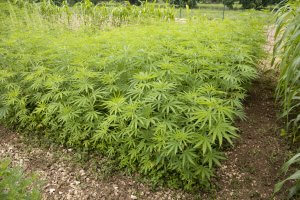
Chinese hemp variety “Puma-3”

The highest-profile alternative crop is hemp. It’s new. It’s headline-grabbing. It played a prominent role in the campaign platform of our Commissioner of Agriculture. In a decade leading Florida agricultural research and development, I’ve never seen such interest in an alternative crop.

We’ve launched an eight-site trial to identify hemp varieties suitable for Florida, to develop practices most likely to produce a profit and to assess its risk as an invasive plant. We’re doing it in part because numerous Farm Bureau members have expressed an interest in it.

We’re also doing it because the Legislature has requested that we carry out hemp research. We’re happy to comply with the Legislature’s wishes and yours. We’ll share what we’ve learned so far through our hemp program website and outreach events such as the Florida Ag Expo at the Gulf Coast Research and Education Center in Wimauma on Nov. 21.

Hemp may someday become a profitable Florida crop. So, too, could peaches, olives, pomegranates, tea, or vanilla. UF/IFAS researches them all.

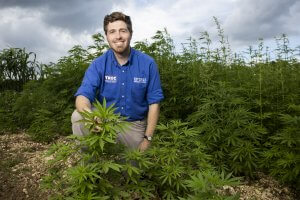
The buzz around hemp does not translate into vast acreage nor wholesale redirection of UF/IFAS research. Even the coordinator of the hemp research, agronomist Zack Brym at the UF/IFAS Tropical Research and Education Center, studies many things besides hemp.

The modest hemp plots scattered across the state are dwarfed by the 582 acres of Citrus Research and Education Center groves, for example. We have another entire research center devoted to range cattle. Still another, in Suwannee Valley, focuses on crops important in that region – peanuts, watermelon, field corn, carrots and peppers. It doesn’t have a single hemp plant.

Let’s remember, peppers were once an alternative or “emerging” crop. I don’t think anyone would classify them as such today.

Good thing we got going decades ago on the scientific discoveries that have helped make Florida the nation’s second-leading bell pepper producer today. You’ve also seen a big payoff from decades of research that have provided the foundation for a blueberry industry in Florida.

We’re approaching hemp as a potential addition to a diversified rotation of crops – not as the next green gold rush. It’s a small, but important part of our research program.

We’ll provide the science so you can make your own judgment about whether hemp is worth a go. Again, we’d be doing you a disservice if we made that choice for you by not researching it thoroughly and leaving you in the dark about its potential or perils.

One of the advantages of having one of the nation’s leading land-grant universities at your service is that we can address so many needs. Attention to the new kid on the block – hemp – doesn’t detract from our work on crops that have been produced here for more than a century.

Jack Payne is the University of Florida’s senior vice president for agriculture and natural resources and leader of the Institute of Food and Agricultural Sciences.


FARM RAISED | FARM PROUD

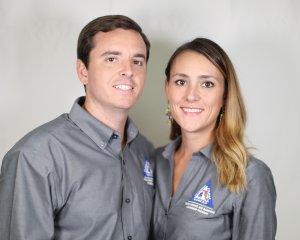
Ben and Katie Morris have been active members of Florida Farm Bureau since they first set foot in the Sunshine State. They have taken every opportunity to grow, learn and network with other agricultural producers.

Ben spent his adolescence on his family’s beef cattle and chicken farm in north Georgia. His passion for agriculture led him to study agribusiness at the University of Georgia. Katie dug up her Central Illinois roots to pursue a career with AgSouth Farm Credit in Georgia. During her time there, she was introduced to the agriculture in that state and everything it had to offer.

After accepting jobs with the University of Florida, the two moved to Gainesville, Florida, where they were introduced to FFBF President John Hoblick. President Hoblick welcomed the couple with open arms and encouraged them to participate in every aspect of Florida agriculture and Florida Farm Bureau.

During their time as Florida residents, the couple has relocated to Wellington, Florida with their two kids James, 4 years-old, and Virginia Ruth, 1.5 years-old. Ben is completing his PhD in Agricultural Leadership through the University of Florida’s online program and Katie is working for Wedgworth’s Inc., the state’s largest fertilizer distributor. In addition, Katie also works with the Sugar Cane Growers Cooperative of Florida. Although they don’t farm themselves, their professional roles allow the two to work closely with growers across the state.

“As parents, we consider ourselves lucky and honored to work alongside the hardworking farmers who provide healthy, fresh food both for our family and our nation,” Katie said.

Being active Farm Bureau members, they look forward to the various district and statewide events where they have the opportunity to network with other young professionals from around the state. They always leave events with a fresh perspective and a new appreciation for Florida agriculture.

One of their favorite agricultural events in West Palm Beach is the Sweet Corn Fiesta. Celebrating its 20th year in April 2020, this event is a celebration of the hardworking farmers in the Everglades Agricultural Area and an opportunity to educate area consumers about the production of sweet corn.