Tag Archives: UF/IFAS

Ag Talk

Jack Payne

By Jack Payne
[email protected]
@JackPayneIFAS

I don’t have a problem with people saying agriculture is part of the source of the state’s water quality challenges. I do have a problem when people who know nothing about ag, drop the “part of.”

It’s bad for agriculture’s public image. It’s also bad science.

One way the University of Florida’s Institute of Food and Agricultural Sciences (UF/IFAS) is trying to get past the finger-pointing and to set the record straight is by joining the Together Florida campaign. Its core message: Everyone is part of the water quality problem, so everyone needs to be part of the solution.

Nutrients that pollute our water can come from septic tanks, lawns, municipal wastewater systems and stormwater runoff as well as from farms. UF/IFAS and the Florida Farm Bureau belong to this coalition to seek an approach to protecting water quality that addresses all sources of pollutants, not one that singles you out.

For example, two of our water scientists, Mary Lusk and Andrea Albertin, are devoting outreach to educating the public about the harm done by leaky septic tanks.
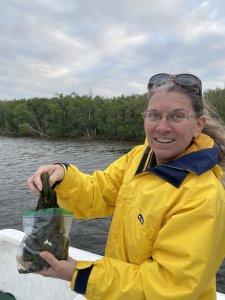
Florida Sea Grant agent Betty Staugler and UF/IFAS Extension regional specialized water agent and Sea Grant affilate Lisa Krimsky synthesized the input of 75 scientists and last month released a state-of-the-science report on algae blooms. It lays out what we know and, importantly, what we don’t know, like “What is the role of P(hosphorus)?”

It also maps out a research agenda that calls for developing a way to separate the various sources of water pollution. It also calls for determining if practices on the farm – or in the city – will reduce blooms. In other words, let’s figure out what actually works before we mandate it.

No one is better positioned than UF/IFAS to plot a strategic course to find answers to water pollution questions. At the same time, we seek to engage policy makers by providing them with the best information available to help them make decisions now, not a decade from now when we have better science.

Many of you are operating out of the UF/IFAS Best Management Practices (BMP) playbook. With state support for public science, we can learn a lot more about how to tailor BMPs by geography, crop, soil type, weather conditions and more.

The Florida Fruit & Vegetable Association (FFVA) deserves a lot of credit for taking the lead on Together Florida. The website includes tools for you to contact your local legislator to support clean water legislation based on science or calls for development of that science.

We help you fight nematodes, crop disease and drought. With the help of the Farm Bureau and FFVA, we’re helping you fight misinformation, too.

Jack Payne is the University of Florida’s senior vice president for agriculture and natural resources and leader of the Institute of Food and Agricultural Sciences.
Ag Talk

Jack Payne
Jack Payne

[email protected]
@JackPayneIFAS
By Jack Payne

One of the greatest compliments the University of Florida’s Institute of Food and Agricultural Sciences gets is some variety of, “If it weren’t for IFAS, I wouldn’t be in business.” It’s the ultimate endorsement of impact.

It’s not just the testimonial. It’s who it comes from. The experts. You.

Every year we strive to provide more of the know-how that keeps you in business. To do that, we have to make the business case for more funding from the Legislature. We call it “workload” – how much of a funding increase we request to keep up with your needs.

If you’re one of those folks who say you wouldn’t be in business without IFAS, please say it to a legislator. Call, write or even visit Tallahassee if you can. You have a powerful voice. You’re the proof that state dollars are spent effectively.

At a recent meeting of the Florida Agricultural Council, UF/IFAS Research Dean Rob Gilbert updated the group with a sampling of our latest scientific breakthroughs. They include:

  • Dr. Mike Mulvaney at the UF/IFAS West Florida Research and Education Center documenting how cover crops increase soil moisture storage. His results have been used to implement a $75-per-acre cost share program in the Blue Springs area, while increasing farm income by $60 per acre for cotton growers in the western Panhandle.
  • Dr. Johnny Ferrarezi planting 5,440 grapefruit trees across 30 acres at the UF/IFAS Indian River Research and Education Center to evaluate rootstocks and scions to rebuild the region’s grapefruit industry.
  • Research by Drs. Joao Vendramini, Jose Dubeux, and Esteban Rios on a bermudagrass variety with greater early spring forage production than most bermudagrass cultivars with similar nutritive value and persistence. It has promise as way for ranchers to cut their feed bills.You may have your own story of how UF/IFAS science improved your bottom line. Please tell people in Tallahassee about it.We can do more of the kinds of things Dean Gilbert highlighted if we have the resources to do so. Workload not only helps us pay researchers’ salaries, but it contributes to the Extension workforce that delivers UF/IFAS science to your community.

Those Extension needs are extensive. For example, there are about 25 county agent positions on hold because we lack funds, even where counties have approved paying part of those salaries. A workload increase would also allow us to consider adding regional specialized agents in precision agriculture, farm enterprise management and natural resources management.

It depends on state funding. Like cops on the beat or schoolteachers in the classroom, agricultural scientists in the lab, greenhouse, demonstration farm, or experimental grove are public servants.

Because your work is largely hidden from the public – and from legislators – so is ours. Please help us tell the story of how we feed Florida, the nation and the world.

Jack Payne is the University of Florida’s senior vice president for agriculture and natural resources and leader of the Institute of Food and Agricultural Sciences.
Ag Talk


Jack Payne

By Jack Payne
@JackPayneIFAS
[email protected]

You are always welcome on the University of Florida campus, but I hope you’ll consider coming to visit us this month. You’ll get a look at your future.

We’re bringing some of the best minds in the world here to help us determine how to keep you – and your children and grandchildren – in the food business. We won’t settle this in two days of events. All the more reason to talk about tomorrow today.

The Future of Food Forum on Jan. 15 aims to give us direction on what researchers and farmers should be doing now to bring innovation to Florida fields. International experts will share the podium with Florida producers.

For example, we’ll have a Gates Foundation executive and the Nigeria-based leader of a global tropical agriculture institute sharing the stage with the Farm Bureau’s own Women’s Leadership Committee chair, Sarah Carte. Another panel puts a Hillsborough County strawberry grower together with captains of agribusiness from companies such as Syngenta.

The next day, Jan. 16, the techies are up. We’ll host “Pathways Towards the Next Generation of Agriculture and Natural Resources in Florida.” We’ll explore how we can harness huge amounts of data to improve your crops, as well as what policies we’ll need to make that happen. We’ll assemble the state’s leading water policy experts to hear what needs to happen to keep the taps running on farms even as cities get bigger and thirstier.

I know you’ve got plenty to deal with in the here and now. But if you don’t start considering drones, artificial intelligence, robots and the like, you’ll be competing someday against growers who already are thinking about these things.

One could dismiss this as all talk if we at UF’s Institute of Food and Agricultural Sciences didn’t have the capacity to act on some of the vision that emerges. When we convene experts, we get A-listers. With UF/IFAS, Florida farmers have one of the best R&D shops anywhere on the planet.

You’re going to need it. Your grandparents or great-grandparents fed about 18 people when they ran the farm. Today, you feed 164. You can expect to be feeding even more as we add 2.5 billion more mouths to the planet by mid-century.

I don’t know how much harder you can work to keep up. You’re going to have to work smarter. We can help. Come to these campus events to get a glimpse of what lies ahead.

If you can’t make it, reconnect with the closest UF/IFAS research and education center or Extension office. But start planning for that future now.

Jack Payne is the University of Florida’s senior vice president for agriculture and natural resources and leader of the Institute of Food and Agricultural Sciences.
AG TALK: A Strong Partnership

[email protected]
@JackPayneIFAS

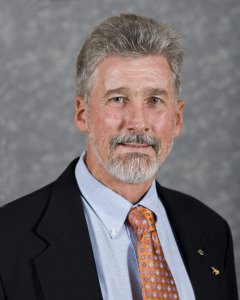
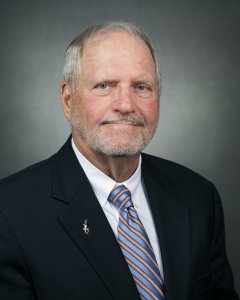
Ten years ago, John Hoblick told an audience on campus recently, he helped find a new leader for the University of Florida’s Institute of Food and Agricultural Sciences. He offered his humble assessment that he had done a great job.

It was his sly, humorous way of paying me a public compliment. He really has done a great job in the decade since, and that’s why he was on the podium at the UF/IFAS Dinner of Distinction in the first place.

John and I didn’t create the strong relationship between UF/IFAS and the Farm Bureau. It precedes us by decades. As John reminded us all at this year’s dinner, though, we didn’t take the relationship for granted either.

In some states, John said that night, the land-grant university and the Farm Bureau don’t get along. It hurts both entities.

By contrast, in Florida, when event organizers sought someone to offer a tribute at my last Dinner of Distinction as senior vice president, the choice was obvious. The guy who helped pick me, and the guy who’s going to help pick my successor, was the guy to bid me farewell.

As stewards of the state’s leading organizations for agricultural scientists and agricultural producers, John and I have become close friends as well as compatible colleagues. We’ve talked about fishing, family, travel and dogs. That has helped us get through the times we have disagreed.

We keep the interests of Florida farming first. We see the results in a $165-billion-a-year industry despite disease, extreme weather events, market volatility and unfair trade practices. We also see great examples of the relationship between farmers and scientists across the state.

In Okaloosa County, Farm Bureau President Keith Free watched Jennifer Bearden grow up and become a county Extension ag agent, and now he has her drive the other tractor in an annual two-vehicle parade through downtown Crestview. In Polk County, UF/IFAS Extension Director Nicole Walker and Polk County Farm Bureau Executive Director Carol McKenzie give 6,000 fourth-graders a close-up look at agriculture in their community.

Suwannee County Farm Bureau mainstay Randall Dasher and UF/IFAS Extension veteran Bob Hochmuth helped revive what had been the Suwannee Valley Agricultural Extension Center and make it a research station. UF/IFAS forage researcher and Extension specialist Jose Dubeux has a standing invitation to send his students for regular visits to Jackson County Farm Bureau board member Mack Glass’s ranch to monitor perennial peanut trials.

I could go on and on. The strong relationships with the Farm Bureau and other commodity associations helped fuel a decade of remarkable progress at UF/IFAS.

We have improved our research and education centers, earned record research funding, achieved record student enrollment in the College of Agriculture and Life Sciences and grown our corps of agricultural Extension agents over what we employed a decade ago.

I don’t get to pick my successor, but I did get to suggest search committee members. Like the event organizers, I found my choice was obvious. President Fuchs accepted my recommendation to put John on the committee.

He’ll do a great job. So, with Farm Bureau support, will my successor.

Jack Payne is the University of Florida’s senior vice president for agriculture and natural resources and leader of the Institute of Food and Agricultural Sciences.
 

Ag Talk

[email protected]

@JackPayneIFAS

We need two types of agricultural science – the science of now, and the science of the future. Researchers are working on what’s in your fields now as well as what might be in them in five, 10, even 20 years.

Most research done by the University of Florida’s Institute of Food and Agricultural Sciences is on the “now” crops – citrus, tomatoes, strawberries, peppers, and many more. If you grow it, we probably study it.

We’d be doing you a disservice if we failed to prepare you for the future. Our work on alternative crops aims to identify what will make you money years from now as conditions, markets and consumers’ preferences change.

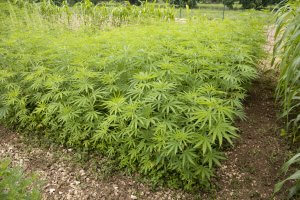
Chinese hemp variety “Puma-3”

The highest-profile alternative crop is hemp. It’s new. It’s headline-grabbing. It played a prominent role in the campaign platform of our Commissioner of Agriculture. In a decade leading Florida agricultural research and development, I’ve never seen such interest in an alternative crop.

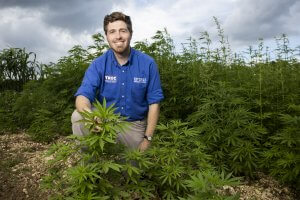
We’ve launched an eight-site trial to identify hemp varieties suitable for Florida, to develop practices most likely to produce a profit and to assess its risk as an invasive plant. We’re doing it in part because numerous Farm Bureau members have expressed an interest in it.

We’re also doing it because the Legislature has requested that we carry out hemp research. We’re happy to comply with the Legislature’s wishes and yours. We’ll share what we’ve learned so far through our hemp program website and outreach events such as the Florida Ag Expo at the Gulf Coast Research and Education Center in Wimauma on Nov. 21.

Hemp may someday become a profitable Florida crop. So, too, could peaches, olives, pomegranates, tea, or vanilla. UF/IFAS researches them all.

The buzz around hemp does not translate into vast acreage nor wholesale redirection of UF/IFAS research. Even the coordinator of the hemp research, agronomist Zack Brym at the UF/IFAS Tropical Research and Education Center, studies many things besides hemp.

The modest hemp plots scattered across the state are dwarfed by the 582 acres of Citrus Research and Education Center groves, for example. We have another entire research center devoted to range cattle. Still another, in Suwannee Valley, focuses on crops important in that region – peanuts, watermelon, field corn, carrots and peppers. It doesn’t have a single hemp plant.

Let’s remember, peppers were once an alternative or “emerging” crop. I don’t think anyone would classify them as such today.

Good thing we got going decades ago on the scientific discoveries that have helped make Florida the nation’s second-leading bell pepper producer today. You’ve also seen a big payoff from decades of research that have provided the foundation for a blueberry industry in Florida.

We’re approaching hemp as a potential addition to a diversified rotation of crops – not as the next green gold rush. It’s a small, but important part of our research program.

We’ll provide the science so you can make your own judgment about whether hemp is worth a go. Again, we’d be doing you a disservice if we made that choice for you by not researching it thoroughly and leaving you in the dark about its potential or perils.

One of the advantages of having one of the nation’s leading land-grant universities at your service is that we can address so many needs. Attention to the new kid on the block – hemp – doesn’t detract from our work on crops that have been produced here for more than a century.

Jack Payne is the University of Florida’s senior vice president for agriculture and natural resources and leader of the Institute of Food and Agricultural Sciences.

 

AG Talk

Eugene McAvoy

For years Gene McAvoy kept a dark blue suit jacket on a hook behind the door in his Extension office. He wore it to farmers’ funerals.

He considered attending funerals a gesture of respect. It was also yet another place to talk to other farmers.

Gene called his job as University of Florida Institute of Food and Agricultural Sciences Hendry County Extension director a “lifestyle.” Home is a Farm Bureau-insured 40-acre ranch. Nights and weekends are at county board meetings where he serves as treasurer, District 8 meetings, Young Farmer and Rancher events, state Vegetable Advisory Committee meetings and special events such as the Sweet Corn Fiesta at which he represents Farm Bureau.

In a sense, the Farm Bureau honors one of its own in recognizing Gene as Extension professional of the year at the annual convention in Orlando this month. It’s hard to think of an Extension agent for whom this would be more meaningful.

The award ceremony and convention are yet another chance for him to talk with farmers from all over the state. Not only that, but Gene usually attends the convention anyway at this own expense, and the award comes with a free night’s hotel stay!

When he’s not with farmers and ranchers, he’s communicating to them or for them. For more than two decades, Gene has run the South Florida Veg Hotline, which started as a printed newsletter and evolved into an electronic message that gets sent out almost daily. It’s got regulatory information, label changes, industry trends, new technology and more.

Then there’s his Pest-of-the-Month column. Unfortunately, he’s never had a shortage of subjects to write about.

Equally important is his work speaking to people other than you – people who don’t live or work on farms. He tells the story of agriculture one small group at a time.

Sometimes he’s telling nursing students to put away their preconceived notion of farm workers being poisoned by pesticides and instead to look out for heat exhaustion, back strains or branches poking them in the eyes as they reach for fruit on branches. Other times, he’s showing legislators how what they do in Tallahassee affects the fields and groves of LaBelle.

He has shown Audubon groups farmland that doubles as valuable habitat to birds. He reads agriculture-related stories aloud in elementary school classrooms. He takes winter visitors on all-day tours of farm country, with stops at citrus groves, sugarcane fields, vegetable farms and packing houses.

Gene knows the value of showing up. It expresses solidarity with the business. It’s a way to learn what’s important to farmers. It’s a way to make sure what you’re doing is relevant.

That was certainly the case when he was among the first to show up at wind- and rain-ravaged farms in the wake of Hurricane Irma. His firsthand accounts of what he saw helped farmers make the case for disaster relief.

The respect he has shown farmers was reflected back on him when he retired from his Extension job in August. More than 200 people came to the LaBelle Civic Center for his retirement party.

He didn’t stay retired long. I’ve appointed him associate director for stakeholder relations at the UF/IFAS Southwest Florida Research and Education Center in Immokalee. This summer he became president of the National Association of County Agricultural Agents.

In retirement Gene’s job title has changed. His lifestyle is unlikely to change much at all. He’ll continue to serve as treasurer for the Hendry County Farm Bureau. You’ll still see him in Orlando, LaBelle and Immokalee. Please congratulate him when you do.

Jack Payne

Jack Payne is the University of Florida’s senior vice president for agriculture and natural resources and leader of the Institute of Food and Agricultural Sciences.
[email protected]
@JackPayneIFAS


Sustainability that Protects Profits and the Planet

Jack Payne

[email protected]
@JackPayneIFAS

I can talk all day to policy makers and the media about how important farming is. But I don’t live it. So when I recently visited an editorial board, I brought someone who does.

Farm Bureau member and vegetable farmer Chuck Obern is the 2019 Swisher Sweets/Sunbelt Expo Florida Farmer of the Year, nominated by Florida Farm Bureau Field Services District Representative, Eva Webb. Chuck drove back and forth from his C&B Farms in Clewiston, met me in Fort Myers and visited the News-Press. Our mission and message: To explain that farmers can offer solutions to climate doom instead of being blamed for it.

Chuck brought decades of street cred to the conversation. A 1979 graduate of the University of Florida Institute of Food and Agricultural Sciences College of Agricultural and Life Sciences, Chuck looks the part of a guy who lives off the land. He wore blue jeans, muddy shoes–and the pièce de résistance – a farmer’s shirt with a Gator logo on it.

He told the story of how he has long taken measures to lock carbon in his soil. He was composting before composting was cool. He took loads of yard waste from municipal haulers–waste that was headed toward a landfill–and diverted it to his fields.

These days he’s doing a lot of experimenting with microbes. His hypothesis is that the right brew of microbes in his soil can help plants absorb more nutrients so less of them seep into an aquifer or get released to the atmosphere.

He doesn’t have scientific evidence to back his claim, but Chuck and one of my soil microbiologists have been seeking funding to run formal experiments on his land and his treatments.


Chuck’s folksy, awe-shucks delivery disarms skeptics so that his wisdom can challenge people to rethink what they believe about farmers. It was an important hour spent countering the narrative of farmers as climate villains or at least adding context to it.

Toward the end, Chuck was asked where he saw himself in five or 10 years. Chuck looked surprised. Five years? With all the threats to agriculture, Chuck said, he can’t see past next season.

At the same time, he’s looking decades into the future. He wants his son, Boots, to run C&B, and then his grandkids, and maybe even his unborn great grandkids after that. So, he’s trying to take care of the land however he can.

He left them with an important message: He can’t take care of the environment without taking care of his bottom line. Chuck is at that intersection of sustainability that protects profits and the planet simultaneously.

I’ve been preaching this for years. But Chuck’s been living it, and now he’s talking about it.

Jack Payne is the University of Florida’s senior vice president for agriculture and natural resources and leader of the Institute of Food and Agricultural Sciences.

The Future of Farming

Senthold Asseng. Associate Professor, PsyD. Agricultural and Biological Engineering.

The robots are coming. They’ll be bringing you on-demand, low-cost advice.

My advice comes from people like Senthold Asseng, who spends a lot of time thinking about the future of farming. He seeks technology-based solutions to your problems.

He paints a hopeful picture of your future farm. Wireless microsensors are going to tell you which plants need nutrients. The robots will respond, applying fertilizer only where it’s needed.

Other high-tech monitoring will warn you when the first pests arrive in your field, well before you’d ever see them. Then you’ll dispatch robots or drones to nip them in the bud and save yourself a whole field’s worth of pesticides.

The way I see it, the only way you’re going to stay competitive is to sell more and spend less. That’s why University of Florida Institute of Food and Agricultural Sciences engineers like Senthold are so important to your future. He is identifying ways technology can save you on labor and other costs – all while you produce more.

You’ve heard me say it time and again – that the food business is global, and innovation is the way America competes. Farmers must also continue to be leaders in protecting the land and water that makes food production possible. The same techno-fixes that reduce costs are also likely to make farming a greener business.

UF/IFAS experts each have a granular expertise on one of the dozens of factors that influence your success, from irrigation to plant disease to whether you can afford to adopt a new technology.

One of the reasons I recently appointed Senthold to lead the Florida Climate Institute is his ability to look at your farms from 30,000 feet. He’s a big-picture thinker. His interest is not a debate about the causes of climate change. It’s to help figure out which technological tools we need to respond to whatever comes from the sky.

The sensors, robots, drones, and computers that Senthold looks at may cost more than you can spend – for now. But at some point, you may not be able to afford NOT spending on technology.

The robots are coming. If not to your farm, then to your competitors’, whether they’re in California, Mexico, or overseas.

That’s why you can expect to see UF/IFAS hire more agents to help you harness technology. Agents like Charles Barrett at our Suwannee Valley center. While he can talk to you in depth about irrigation, he’s going to encourage you to put soil moisture sensors in the ground. He recognizes that technology can tell you more than he can.

Senthold asserts that all the components of the future farm already exist. What will change is that they’ll become cheaper. What will also change is that you and your heirs will become more fluent in their use.

Robots need robot wranglers. Huge harvests of data require data scientists. Automation software can’t work without programmers. Figuring out how to apply the know-how of these cutting-edge professions to food production, Senthold reminds us, is another job of the future farmer.

Jack Payne is the University of Florida’s senior vice president for agriculture and natural resources and leader of the Institute of Food and Agricultural Sciences.

Leadership Development

Of all the commodities we produce in Florida, the most important is leaders. People like John Hoblick, Brant Schirard, Adam Basford and Staci Sims are essential to the success of the other 300 commodities.

The University of Florida’s Institute of Food and Agricultural Sciences invests so much in leadership development programs as a way to help every farmer, rancher, and forester. Not surprisingly, we need good leaders to help prepare other leaders. People like Christy Chiarelli.

Chiarelli started as director of the Wedgworth Leadership Institute for Agriculture and Natural Resources on June 3.

Chiarelli arrived in Gainesville in 2006 as a junior after serving as a National FFA Officer from Mississippi. She already knew she wanted a career in agriculture. One of the seminal experiences of her undergraduate career was an internship with the Florida Farm Bureau. It’s when she met John Hoblick. And it’s when she met Adam Basford, who was her supervisor and is now your director of state legislative affairs.

After earning her master’s degree while working for the UF/IFAS Center for Public Issues Education, she served as a program adviser for Class VIII of the Wedgworth Leadership Institute. Sims, who is now the Florida Farm Bureau general counsel, was a member of that class, and she and Chiarelli forged a strong relationship that continues today.

Chiarelli also made many Farm Bureau friends as a UF/IFAS advancement officer, which helped her raise $1.7 million for the institute she now leads. She’ll continue to rely on her Farm Bureau network to help her scout the state for rising talent who can become better equipped to lead their industries with Wedgworth training.

John, Brant (your vice president), Adam, and Staci say they still draw on lessons learned and relationships forged in 22 months (longer than most master’s degree programs) in Wedgworth.

President Hoblick says Wedgworth has been a “huge part of my foundation for leadership of the Florida Farm Bureau Federation.” He also offers this endorsement: “The basic principles of leadership that do not get printed in textbooks come alive with this program. It’s a hands-on, practical approach in real-life situations that this program puts you through – and that’s big.”

Chiarelli is dedicated to helping you succeed. You can help her succeed by nominating someone for Class XI of the Wedgworth Leadership Institute by July 15. Visit www.wedgworthleadership.com or call Christy at 352-392-1038 for details.

She speaks the language of leadership. She learned it through two Gator degrees in agricultural education and communication within the College of Agricultural and Life Sciences. She further honed it in strengthening the connections between UF/IFAS and its supporters while raising millions of dollars for the science that drives Florida farming success.

Chiarelli also speaks the language of the ranch, the field and the grove. As a girl she helped her grandfather with his cows. She also bought and sold her own livestock, including market lambs and Brahman cattle. She spent years in FFA, rising to president of the Mississippi FFA Association and then getting elected as the Southern Region National FFA Vice President.

A change in Wedgworth leadership is a big deal. It has only happened one other time in the organization’s 40-year history. It’s a job Chiarelli has spent all that time preparing for, getting help along the way from FFA advisors, UF/IFAS faculty, the Farm Bureau and others.

It’s never too early to start looking for the next generation of talent. We’ll be keeping an eye on UF/IFAS College of Agricultural and Life Sciences students who intern with the Farm Bureau. Chiarelli may pass the leadership torch to one of them some day.

[email protected]
@JackPayneIFAS

Jack Payne is the University of Florida’s senior vice president for agriculture and natural resources and leader of the Institute of Food and Agricultural Sciences.

Jack Payne, Ag Talk

Jack Payne
[email protected]

@JackPayneIFAS

It’s often better to retain customers than to find new ones. It’s easier, and it gives you time to better understand what your customers need.

Florida agriculture doesn’t have a bigger international customer than Canada. It buys more from Florida farms than does any other nation by far.

The University of Florida’s Institute of Food and Agricultural Sciences advancement team recognized this relationship in proposing that the annual UF/IFAS-Farm Bureau reception in Washington, D.C., be held at the Embassy of Canada. Florida Farm Bureau leaders recognized it, too, and quickly agreed on the venue.

So many people registered for last month’s Global Partners Reception that we had to work with event planners to move to a bigger function room. The beautiful view and the proximity to the Capitol made it a great location.

U.S. Reps. Ted Yoho and Greg Steube made appearances at the reception. Canada’s ambassador to the United States, David MacNaughton, addressed the group. The Canadian consul general in Miami, Susan Harper, joined us as well, and we hope to have her up to campus in Gainesville soon.

We talk a lot about the breadth of the commodities in Florida agriculture, with somewhere around 300 different crops produced by Farm Bureau members. What we don’t as often highlight is the breadth of the geography of the markets for Florida produce. This reception celebrated the reach of Florida agriculture.

With all the challenges facing Florida farmers, from hurricanes to HLB, the reception was an occasion to celebrate an export market as strong as that to our north. UF/IFAS science helps Florida farmers overcome those challenges, and there’s strong demand for their products in places like Ottawa.

Florida and Canada differ on a few details of what fair trade looks like, but we agree on the big picture of how mutually beneficial trade is. Canada imports $747 million worth of Florida farm products annually, while the most recent yearly statistics indicate Florida imported $663 million in goods from Canadian farms.

Ambassador MacNaughton mentioned another important role Canada plays in Florida agriculture. Canada’s cooler, dryer summers make it a great place to start strawberry plants. Of the approximately 180 million strawberry transplants sent to Florida each year, roughly a third come from Canada.

UF/IFAS creates the varieties, and Florida farmers grow them, but our northern neighbor is essential to filling the orders for Florida farmers to fill their fields each year.

The ambassador’s bigger message was an appreciation for our strong trade relationship. Diplomats and trade officials will work out the complex rules of that trade relationship.

UF/IFAS and the Farm Bureau will work on the benefits of that trade relationship – safe, nutritious, abundant food that retains customers in Canada and Florida.

Jack Payne is the University of Florida’s senior vice president for agriculture and natural resources and leader of the Institute of Food and Agricultural Sciences.