All posts by Rachael Smith

Be the Voice. Live the Legacy

Tom Rieder, Florida Farm Bureau, Dade County Farm BureauTom Rieder
Dade County Farm Bureau President

Born and raised in Miami, Dade County Farm Bureau President Tom Rieder has made a name for himself in South Florida agriculture realty.

In 1971, he began his career in vacant land sales and by 1974 he was operating his own business. Today, Rieder Realty sells vacant agricultural and environmentally sensitive properties to the USDA, Water Management Districts and other Florida counties, primarily from Orlando, south.

A forty-nine-year veteran in the ag real estate world, Rieder has developed a love for Florida lands. “At one time I had an office in Polk County where we sold mainly citrus and cattle lands,” he said.

“One of my favorite things about Farm Bureau is the people,” he said. “I like working with people who are close to the land.” As a commercial multi-engine instrument pilot, Rieder has the ability to transport himself all over the state to meet property owners and he also uses his skills for aerial photography.

An avid fisherman and outdoorsman, Rieder enjoys hunting, camping and hiking.

Rieder lives in Pinecrest, an area in between Miami and Homestead, with his wife of nearly 50 years, Susie. Together the Rieders have three children and four grandchildren.

A Farm Bureau member for 20 years, Rieder has spent the last eight serving on the Dade County Farm Bureau Board of Directors and his currently in his first year as president.

He explained that the biggest event of the year is the Dade County Farm Bureau BBQ. Held each spring, the event attracts members of the community who dine on a homemade meal while recognizing outstanding volunteers and the Farm Family of the Year.

“The farmers do the cooking with vegetables from our fields. It’s a great time for people to come together,” Rieder stated.

Unfortunately, this year’s BBQ has been postponed due to the public health emergency.

Rieder enjoys Susie’s Italian cooking and said that “her sweet and sour meatballs are my favorite! It’s also hard to beat a good steak.”

Social Media Posting Basic Tips

Women’s Committee Handbook

  • Good grammar is key! You are an editor now. Watch spelling and punctuations. You are posting to the world and will be called out on it.
  • Try not to use CAPS LOCK. It is obnoxious!
  • Keep content brief. One to two sentences with a link, photo or video at max.
  • Know your audience and your tone. Students/younger audiences are more casual, light and fun. Business leaders are more serious. They go to your page to get useful information.
  • Think before you post. Don’t say it if you have a doubt. Never post anything that could be misconstrued. Once something is posted, it is a viral grapevine. Make sure what you post is appropriate and is ok to be shared with millions.
  • Retweet or share other posts from organizations in your community and look for Farm Bureau posts to share.
  • Pick your ideal post time according to your Page’s engagement. 6-9 a.m. / 12-3 p.m. / 4-9 p.m. (these vary; check your metrics unique to your own page)
  • Have a strategy. Schedule out your posts and tie into any community or agriculture events.
  • Post photos of people to boost engagement. Photos of a Youth Speech Contest or a charitable event humanize your post.
  • Be sure to respond to any comments, positive or negative. If you are unsure of an answer contact the state office. We are here to help.
  • Link to stories related to your community that are of interest to your membership.
  • Share food articles/recipes. Ask members to submit favorite recipes around holiday.
  • Use and post videos when possible. Videos are an engaging and authentic way to tell your story.
  • Post regularly. Use Facebook Scheduler or tools such as Buffer or Hootsuite to help schedule posts ahead if you are short on time.
  • Have fun with it!

Public Speaking 101

Women’s Committee Handbook

Speaking in public is the #1 fear of all fears. The fear of dying is #7! Over 41% of people have some fear or anxiety dealing with speaking in front of groups. People who have this fear can experience all kinds of symptoms: Sweaty palms, accelerated heart rate, memory loss and even difficulty in breathing.

Some of the world’s most famous presenters have freely admitted to nervousness and stage fright. Mark Twain said it best, “There are two types of speakers: those that are nervous and those that are liars”.

Everyone, even experienced speakers, has some anxiety when speaking in front of a group of people. The best way to deal with this anxiety is to first acknowledge that this fear is perfectly normal and you are not alone. To reduce your fear, you need to make sure you properly and thoroughly prepare yourself before you speak. Proper preparation and rehearsal can help to reduce this fear by about 75%. Proper breathing techniques can further reduce this fear by another 15%. Your mental state accounts for the remaining 10%.

Below are just a few suggestions you should use to overcome your speaking anxiety. The first and most important of all is preparation. Think of it as the 9 P’s:

Prior Proper Preparation Prevents Poor Performance of the Person Putting on the Presentation.

Nothing will relax you more than to know you are properly prepared. Below are 10 steps you can take to reduce your speech anxiety.

  1. Know the room – Become familiar with the place in which you will speak. Arrive early and walk around the room including the speaking area. Stand at the podium and speak into the microphone. Walk around where the audience will be seated. Walk from where you will be seated to the place where you will be speaking.
  2. Know the Audience – If possible, greet some of the audience as they arrive and chat with them. It is easier to speak to a group of friends than to a group of strangers.
  3. Know Your Material – If you are not familiar with your material or are uncomfortable with it, your nervousness will increase. Practice your speech or presentation and revise it until you can present it with ease.
  4. Learn How to Relax – You can ease tension by doing exercises. Sit comfortable with your back straight. Breathe in slowly, hold your breath for 4 to 5 seconds, and then slowly exhale. To relax your facial muscles, open your mouth and eyes wide, then close them tightly.
  5. Visualize Yourself Speaking – Imagine yourself walking confidently to the lectern as the audience applauds. Imagine yourself speaking, your voice loud, clear and assured. When you visualize yourself as successful, you will be successful.
  6. Realize People Want You To Succeed – All audiences want speakers to be interesting, stimulating, informative and entertaining. They want you to succeed – not fail.
  7. Don’t apologize For Being Nervous – Most of the time your nervousness does not show at all. If you don’t say anything about it, nobody will notice. If you mention your nervousness or apologize for any problems you think you have with your speech, you’ll only be calling attention to it.
  8. Concentrate on Your Message (not the medium) – Your nervous feelings will dissipate if you focus your attention away from your anxieties and concentrate on your message and your audience, not yourself.
  9. Turn Nervousness into Positive Energy – The same nervous energy that causes stage fright can be an asset to you. Harness it, and transform it into vitality and enthusiasm.
  10. Gain Experience – Experience builds confidence, which is the key to effective speaking. Most beginning speakers find their anxieties decrease after each speech they give.Remember, “He who fails to prepare is preparing for failure – so Prepare, Prepare, Prepare!”

    The more you know about your speaking environment and your audience, the more relaxed you will be when delivering your speech. Many speakers; however, often overlook the need to include any kind of audience analysis as part of their speech preparation. Proper audience analysis will assure that you give the right speech to the right audience. Using the word “A-U-D-I-E-N-C-E” as an acronym, we have defined some general audience analysis categories that these surveys should include.

     Analysis – Who are they? How many will be there?

    Understanding – What is their knowledge of the subject?

    Demographics – What is their age, sex, educational background?

    Interest – Why are they there? Who asked them to be there?

    Environment – Where will I stand? Can they all see & hear me?

    Needs – What are their needs? What are your needs as the speaker?

    Customized – What specific needs do you need to address?

    Expectations – What do they expect to learn or hear from you?

    Develop specific questions that fit into each of these eight categories and ask the client or audience to tell you what they want. Essentially, ask them what they need and give it to them.


Letter Writing Tips

Women’s Leadership Handbook

Many newspapers are anxious to hear from their readers and to share information that has a local angle. Because of this, letters-to-the-editor can be an effective way to communicate information about agriculture and the Farm Bureau. It is important to remember that letters do not always need to be in response to a previous article or editorial. Rather, letters can simply be a platform to vocalize information that is positive about agriculture and Farm Bureau. More often than not, your letter WILL be published. To take advantage of this opportunity and to do so effectively, simply follow these letter-writing basics.

  1. Make it legible. Type your letter if possible, using double spaces. Write on only one side of the paper.
  2. Keep it simple. Be as brief as possible, while still long enough to make your case. Focus in on the basic idea in the first sentence or two so the editor can quickly determine why you are writing. Letters of 150 – 200 words are most likely to get printed, and least likely to get edited.
  3. Make it readable. Give specific examples to support your points. Use personal experiences when possible. Use short sentences and avoid using jargon. Avoid all long paragraphs.
  4. Make it timely. If you are responding to a news story or someone else’s letter, try to mail your letter within three days. Refer to the article or letter in your first sentence.
  5. Identify yourself. If you are writing on your own, identify yourself with a short introduction that explains why you are knowledgeable on this topic. For instance, “our family has been farming for over 20 years” or “as a farmer, I believe.” If you are writing on behalf of the county Farm Bureau or some other group, include that information at the beginning. At the end of the letter, sign you name and give an address along with a phone number.
  6. Address it properly. Use the following both for the address at the top of your letter and as the address on the envelope: Letters to the Editor, Newspaper Name, Newspaper address, and your salutation should be, “Dear Editor.”
  7. Keep a copy. If your letter gets printed, you will want to compare your original copy with how the newspaper published it. That allows you to make sure the intent of your letter was not changed by editing and that no crucial point was eliminated.
  8. Be persistent. If you send a letter and it does not get printed, do not get discouraged. Review letters that did get printed, especially on the same topic. You will probably see how you could have made yours more effective.

Volunteers

Women’s Committee Handbook

Matching the Volunteer to the Job

What has this person done well?
A person will tend to volunteer for a task, which is similar to one, which he/she performed before.

What does this person like to do?
Too many times, the volunteer is eagerly accepted to fill a spot to suit the organization’s immediate need, but the real needs of the volunteer are never known, and the person’s real skills are never used.

What would the person like to do better?
People join volunteer efforts to develop their skills. Help them determine how their involvement will benefit them.

With whom would he/she like to work?
Often the prospective volunteer has been encouraged to enroll by someone already engaged in the work. Or perhaps the volunteer is hoping to meet new friends or get to know an influential leader.

What are the person’s aspirations?
Determine the possible objectives of the individual as you speak with the volunteer.

Does the person see the value of the task?
Ensure that the prospective volunteer sees the meaning and importance of the work.

Asking them to Serve

Successful Ways to Ask:

  • Know what the job is
  • Give a complete explanation of the job
  • Make an appointment to visit them at their home
  • Keep the appointment
  • Tell them why you are asking them
  • Tell them why the job is important
  • Tell them the time required
  • Tell them what has been done before
  • Ask them to help!

Ways that are Sure to Fail:

  • Tell them you are desperate
  • Tell them that they owe you
  • Lie a little to make the task seem more appealing
  • Make them feel guilty
Increasing Committee Effectiveness
  • Set goals
  • Build teams
  • Send them to training
  • Establish reporting mechanisms
  • Eliminate dead weight
  • Celebrate accomplishments


Committees

Women’s Handbook

Working on a committee can be a deeply rewarding experience to both the individual and the organization. Effective committees can be one of the most important working forces of our organization. This is particularly true if committee members are selected for the contribution they can make and are made to feel that it is an honor and a privilege to be called to serve.

Committees may serve the organization in the following ways:

  • They can do the majority of the work of the organization.
  • They can provide an opportunity for individuals to do the kind of work for which they are especially suited.
  • An important contribution of committees, one that is frequently overlooked, is their potential for providing an excellent training ground for new leaders.
  • The wise use of committee members helps to capitalize on the training and experience of a wider representation of organizational membership.
  • Committees permit wider participation of members.
  • Committee members have much wider contacts and can provide greater access to various facilities (or means) to accomplish the goals of the organization, more so than the officers of the organization alone.
Advantages … Qualifications … Appointments …

1.  What are the advantages of using a committee?

  • Development of unified support for an idea
  • A small group is easier to work with than a large group
  • Issues may be discussed more freely
  • Can bring in outside authorities
  • Representation of various segments of the membership
  • Committees generate enthusiasm
  • Coordination and communication among various groups
  • Encourages the participation of a larger number of members. Encourages the input of ideas and opinions of several members 

2. What qualifications should be looked for when naming members of a committee?

  • Active past participation
  • Ability to communicate
  • Initiative
  • Representation of various membership segments
  • Committee continuity  

3. What are the recommended steps in appointing committee members?

  • The leader selects proposed committee members
  • An agreement to serve is obtained before final selection is made
  • The leader makes the selection
  • Names are submitted to the board for approval
  • The member selected is notified of her appointment  
Benefits to the Committee Members

 Place to transform ideas into action

  • Gain experience in decision making, leadership and communication skills
  • Develop network of contacts
  • Increase professional knowledge
  • Broaden current expertise
Tips for Organizing Committees
  • Size: appoint five to seven people for each committee
  • Composition: committee members should be representative of the membership, and should include a mix of new and veteran members
  • Choose Wisely:

A Good Committee Chair :

    • keeps the group focused on its objective
    • takes part in the group discussions without being too dominant
    • summarizes committee discussions from time to time-has vision, but maintains objectivity
    • encourages committee members to express themselves – does not shoot down new ideas
    • follows up with members to ensure that work is being done
    • communicates regularly with the board

A Good Committee Member:

    • is receptive to ideas
    • has perspective and vision
    • is familiar with the goals of the organization
    • is able to express ideas effectively
    • enjoys to give and take committee discussion; is willing to commit the time to attend meetings; can think in terms of the overall good
  • Give the committee a clear statement of purpose 
  • Clarify the authority of the committee
  • Send committee member names to the state office


Conducting Meetings

Women’s Committee Handbook

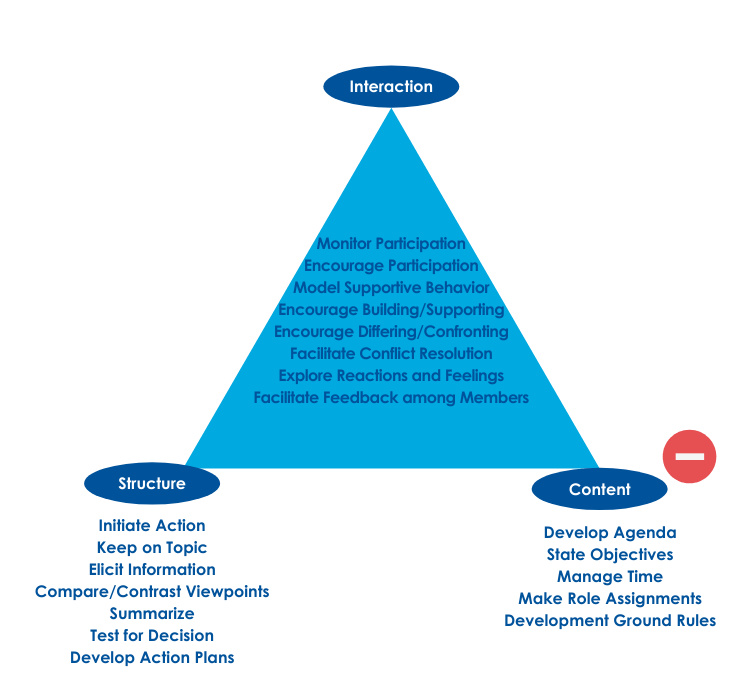
The meeting leader must focus the energy and attention of participants and keep them moving towards the meeting’s objectives. This is a multifaceted task that can be better understood by breaking a meeting into three major components.

The Major Components of a Meeting

Content – The information, knowledge, experience, opinions, ideas, myths, attitudes and expectations that participants bring to the meeting.

Interaction – The way participants work together while processing the meeting’s content. This includes feelings, attitudes and expectations that bear on cooperation, listening, participation, trust and openness.

Structure – The way in which both information and participants are organized to achieve the meeting’s purpose.

An effective leader is attentive to each of the above meeting components. The meeting leader’s role is to monitor progress and provide direction. In some meetings participants help provide direction. This makes the leader’s job easier. In other meetings the leader is requires to provide most of the direction.

To be an effective leader you must be able to analyze each situation, determine what is needed to move forward and take necessary action to achieve the objectives. On the following page is an outline of activities in each of the component areas that may be appropriate during a meeting.

Conducting Meetings

The leader’s role is to monitor the activity in each key component areas and provide missing elements required to move the group toward the meeting’s objectives.


Sample Agenda

See Agenda Example

Effective Meetings

Sticking to Business

  • To prevent wandering during your meetings, use some of these techniques:
  • Plan discussion, set your goals for what you want to accomplish
  • Plan, Plan, Plan
  • Plan your agenda Focus on local issues
  • Start on time
  • Move non-agenda, non-critical issues to next month’s agenda
  • Use board meeting time wisely, don’t waste time on delegate-able decisions
  • Be aware of board meeting time and its allocation Eliminate unnecessary recesses
  • Ban cell phones or excuse cell phone users from the room Hold questions until the speaker is finished
  • Set time limits for reports and speakers

Seven Ways to Stop Meeting Creativity

  • We’ve never done it that way in this organization.
  • We’re not ready for that yet.
  • We’re doing all right without it.
  • We’ve tried that once and it failed. Why bother doing it again?
  • It cost too much.
  • That’s not our responsibility. Why should we get involved?
  • It won’t work.
Meeting Evaluation

Directions: Consider the typical meeting you attend. Compare your meeting to the following characteristics of an effective meeting. Check those statements that apply to meetings you normally conduct or attend.

  • An agenda is prepared prior to the meeting.
  • Meeting participants have an opportunity to contribute to the agenda.
  • Advance notice of meeting time and place is provided to those invited.
  • Meeting facilities are comfortable and adequate for the number of participants.
  • The meeting begins on time.
  • The meeting has a scheduled ending time.
  • The use of time is monitored throughout the meeting.
  • Everyone has an opportunity to present his or her point of view.
  • Participants listen attentively to each other.
  • There are periodic summaries as the meeting progresses.
  • No one tends to dominate the discussion.
  • Everyone has a voice in decisions made at the meeting.
  • The meeting typically ends with a summary of accomplishments.
  • The meeting is periodically evaluated by the participants.
  • People can be depended upon to carry out any action agreed to during the meeting.
  • Minutes of the meeting are provided to each participant following the meeting.
  • The meeting leader follows up with participants on action agreed to during the meeting.
  • The appropriate and necessary people can be counted on to attend each meeting.
  • The decision process used is appropriate for the size of the group.
  • When used, audiovisual equipment is in good working condition and does not detract from the meeting.

Number of statements checked____________ x 5 = ____________ Meeting Score

A score of 80 or more indicates you attend a high percentage of quality meetings. A score below 60 suggests that work be required to improve the quality of meetings you attend.

Be the Voice. Live the Legacy

Mickey Bandi
Okeechobee County Farm Bureau President

Okeechobee County Farm Bureau President Mickey Bandi is proud to represent the farmers and ranchers in his community. “Agriculture is the largest industry in Okeechobee County,” he said.

“It’s very important to us to be part of organizations like Farm Bureau that look out for you.”

The Okeechobee County native grew up with a strong work ethic. His father was from Pennsylvania and tested experimental farm equipment for New Holland and his mother grew up on her family’s cattle farm in nearby Belle Glade.

He spent his summers as a child visiting Pennsylvania, growing hay and raising vegetables.

Today, Bandi lives in Okeechobee with his wife, Lori, and their two daughters, Lillie (11) and Alexis (Lexi) (7). Lori is a high school economics teacher and Mickey is the elected county property appraiser.

Both of their daughters hold an interest in agriculture, Lillie shows cattle and Lexi has a duck, affectionately named, Elvis.

Bandi graduated from the University of Florida with a degree in food and resource economics. He has been active in his county Farm Bureau serving as a board member for the last seven years and is currently serving his first year as president.

Bandi is proud of the annual Farm City-Week event, sponsored by the local Farm Bureau and held at the KOA Campground. “I’ve been involved in this event since I was in high school,” he said.

“FFA and 4-H kids set up booths, a speaker is invited to speak and a meal is served.” A local farmer or farm family is honored at the event and it provides an opportunity for the community to gather support for local farmers and youth agriculture.

2020 Constitutional Amendments

The process to amend the state constitution is interesting in Florida, as there are multiple avenues to change our state’s fundamental governing document. Florida Farm Bureau takes a close look at all of the constitutional proposals on the ballot and has always been wary of citizen initiatives that change the state’s foundational document.

FFBF policy states that the Constitution should be the founding document that describes the powers, duties and functions of the state government. FFBF policy also opposes measures that could be addressed through the regular legislative process. So clearly, a very high standard must be met for amendments to gain support.

The 2020 amendments below are proposals that have already made ballot status or are pending Florida Supreme Court approval through the citizen initiative process. The FFBF board will likely review these at the next board meeting.

Amendment 1: Citizenship Requirement to Vote in Florida Elections

Sponsor: Florida Citizen Voters

Florida Supreme Court Approval: Yes

This amendment states that only United States citizens who are at least eighteen years of age, permanent residents of Florida and registered to vote, as provided by law, shall be qualified to vote in a Florida election.

Amendment 2: Raising Florida’s Minimum Wage

Sponsor: Florida for a Fair Wage

Florida Supreme Court Approval: Yes

This amendment raises minimum wage to $10.00 per hour effective September 30, 2021. Each September 30 thereafter, minimum wage shall increase by $1.00 per hour until the minimum wage reaches $15.00 per hour on September 30, 2026. From that point forward, future minimum wage increases shall revert to being adjusted annually for inflation starting September 30, 2027.

Amendment 3: All Voters Vote in Primary Elections for State Legislature, Governor and Cabinet

Sponsor: All Voters Vote, Inc.

Florida Supreme Court Approval: Pending

This amendment allows all registered voters to vote in primaries for state legislature, governor, and cabinet regardless of political party affiliation. All candidates for an office, including party nominated candidates, appear on the same primary ballot. The two highest vote getters advance to general election. If only two candidates qualify, no primary is held and the winner is determined in the general election. The candidate’s party affiliation may appear on the ballot as provided by law. This would be effective January 1, 2024.

Amendment 4: Voters Approval of Constitutional Amendments

Sponsor: Keep our Constitution Clean PC

Florida Supreme Court Approval: Pending

This amendment requires all proposed amendments or revisions to the state constitution to be approved by the voters in two elections, instead of one, in order to take effect. The proposal applies the current thresholds for passage to each of the two elections.

Florida Farm Bureau Federation is also supporting House Bill 7037 by Rep. Jamie Grant during the 2020 legislative session. This legislation includes several provisions that make the Constitutional initiative process more deliberative including raising the threshold of voter petitions to trigger language review, transparency measures requiring disclosure of out-of-state participation and shortening the amount of time groups have to gather petitions. It will also require groups pushing for a ballot initiative to pay for the signature verification process with local supervisors of elections’ offices. This bill adds important accountability into the system that allows citizens to propose amendments to the Florida constitution.

Ag Talk

Jack Payne

By Jack Payne
[email protected]
@JackPayneIFAS

I don’t have a problem with people saying agriculture is part of the source of the state’s water quality challenges. I do have a problem when people who know nothing about ag, drop the “part of.”

It’s bad for agriculture’s public image. It’s also bad science.

One way the University of Florida’s Institute of Food and Agricultural Sciences (UF/IFAS) is trying to get past the finger-pointing and to set the record straight is by joining the Together Florida campaign. Its core message: Everyone is part of the water quality problem, so everyone needs to be part of the solution.

Nutrients that pollute our water can come from septic tanks, lawns, municipal wastewater systems and stormwater runoff as well as from farms. UF/IFAS and the Florida Farm Bureau belong to this coalition to seek an approach to protecting water quality that addresses all sources of pollutants, not one that singles you out.

For example, two of our water scientists, Mary Lusk and Andrea Albertin, are devoting outreach to educating the public about the harm done by leaky septic tanks.

Florida Sea Grant agent Betty Staugler and UF/IFAS Extension regional specialized water agent and Sea Grant affilate Lisa Krimsky synthesized the input of 75 scientists and last month released a state-of-the-science report on algae blooms. It lays out what we know and, importantly, what we don’t know, like “What is the role of P(hosphorus)?”

It also maps out a research agenda that calls for developing a way to separate the various sources of water pollution. It also calls for determining if practices on the farm – or in the city – will reduce blooms. In other words, let’s figure out what actually works before we mandate it.

No one is better positioned than UF/IFAS to plot a strategic course to find answers to water pollution questions. At the same time, we seek to engage policy makers by providing them with the best information available to help them make decisions now, not a decade from now when we have better science.

Many of you are operating out of the UF/IFAS Best Management Practices (BMP) playbook. With state support for public science, we can learn a lot more about how to tailor BMPs by geography, crop, soil type, weather conditions and more.

The Florida Fruit & Vegetable Association (FFVA) deserves a lot of credit for taking the lead on Together Florida. The website includes tools for you to contact your local legislator to support clean water legislation based on science or calls for development of that science.

We help you fight nematodes, crop disease and drought. With the help of the Farm Bureau and FFVA, we’re helping you fight misinformation, too.

Jack Payne is the University of Florida’s senior vice president for agriculture and natural resources and leader of the Institute of Food and Agricultural Sciences.