All posts by Rachael Smith

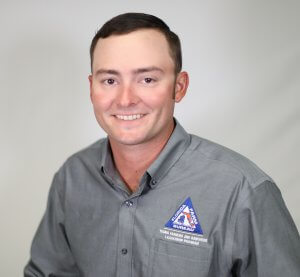
Jared Plair, District 8 YF&R Leadership Committee

Jared Plair serves counties in District 8 on the Florida Farm Bureau State Young Farmers and Ranchers Leadership Committee. Counties in his district include Glades, Hendry, Palm Beach, Collier, Broward and Dade.

The twenty-six year old is from LaBelle and is active in Farm Bureau at the local level as well as the state level. Plair serves as secretary of the Hendry/Glades County Farm Bureau (HGCFB) Board of Directors, chair of the HGCFB Young Farmers and Ranchers Committee and is a technical advisor on FFB’s Sugar Advisory Committee.

Plair is a farm manager for the United States Sugar Corporation where he manages more than 18,000 acres of farmland, primarily sugar, daily.

He is a graduate of Abraham Baldwin Agricultural College where he received a bachelor’s degree in diversified agriculture. Currently, Plair is working on obtaining a M.B.A. from Warner University.

“My passion for agriculture really came to light in middle school when I began working for a local citrus producer,” he said. “That passion was broadened as I reached my high school years while working for various cattle operations in Hendry/Glades County.”

Agriculture was a natural fit for Plair’s future given his involvement and work experience at a young age. He explained that networking with other farmers and ranchers has been one of Farm Bureau’s greatest rewards.

“Through Florida Farm Bureau I’ve been able to meet and build relationships with people across the state,” he said. “People who are involved in various other industries, but who face obstacles similar to the ones we face in South Florida.”

Each year in October, HGCFB holds its annual meeting. “This dinner brings people together,” he said. “It gives everyone a chance to catch up with one another and see other members of the county Farm Bureau that wouldn’t normally get to see otherwise.”

The Future of Farming

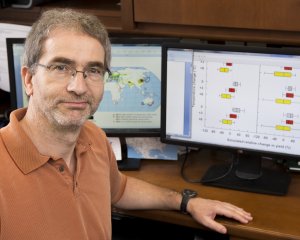
Senthold Asseng. Associate Professor, PsyD. Agricultural and Biological Engineering.

The robots are coming. They’ll be bringing you on-demand, low-cost advice.

My advice comes from people like Senthold Asseng, who spends a lot of time thinking about the future of farming. He seeks technology-based solutions to your problems.

He paints a hopeful picture of your future farm. Wireless microsensors are going to tell you which plants need nutrients. The robots will respond, applying fertilizer only where it’s needed.

Other high-tech monitoring will warn you when the first pests arrive in your field, well before you’d ever see them. Then you’ll dispatch robots or drones to nip them in the bud and save yourself a whole field’s worth of pesticides.

The way I see it, the only way you’re going to stay competitive is to sell more and spend less. That’s why University of Florida Institute of Food and Agricultural Sciences engineers like Senthold are so important to your future. He is identifying ways technology can save you on labor and other costs – all while you produce more.

You’ve heard me say it time and again – that the food business is global, and innovation is the way America competes. Farmers must also continue to be leaders in protecting the land and water that makes food production possible. The same techno-fixes that reduce costs are also likely to make farming a greener business.

UF/IFAS experts each have a granular expertise on one of the dozens of factors that influence your success, from irrigation to plant disease to whether you can afford to adopt a new technology.

One of the reasons I recently appointed Senthold to lead the Florida Climate Institute is his ability to look at your farms from 30,000 feet. He’s a big-picture thinker. His interest is not a debate about the causes of climate change. It’s to help figure out which technological tools we need to respond to whatever comes from the sky.

The sensors, robots, drones, and computers that Senthold looks at may cost more than you can spend – for now. But at some point, you may not be able to afford NOT spending on technology.

The robots are coming. If not to your farm, then to your competitors’, whether they’re in California, Mexico, or overseas.

That’s why you can expect to see UF/IFAS hire more agents to help you harness technology. Agents like Charles Barrett at our Suwannee Valley center. While he can talk to you in depth about irrigation, he’s going to encourage you to put soil moisture sensors in the ground. He recognizes that technology can tell you more than he can.

Senthold asserts that all the components of the future farm already exist. What will change is that they’ll become cheaper. What will also change is that you and your heirs will become more fluent in their use.

Robots need robot wranglers. Huge harvests of data require data scientists. Automation software can’t work without programmers. Figuring out how to apply the know-how of these cutting-edge professions to food production, Senthold reminds us, is another job of the future farmer.

Jack Payne is the University of Florida’s senior vice president for agriculture and natural resources and leader of the Institute of Food and Agricultural Sciences.

Farm Raised | Farm Proud: Kyle Patterson, District 7

Kyle Patterson represents counties in district 7 on the State Young Farmers and Ranchers Leadership Committee. Counties in his district include Orange, Brevard, Osceola, Indian River, Okeechobee, St. Lucie and Martin.

Patterson grew up in Christmas, a small town in Orange County. He became involved in agriculture at a young age by joining his local 4-H club. “I grew up in 4-H and FFA showing steers and heifers,” he said.

“I also worked at my grandfather’s horse stable.” Patterson started raising cattle when he was ten years old, showing at the local fair. “I started my herd when I was working cows with my grandfather and I took in an orphan calf and bottle-fed her,” he said.

The summer of his 15th year Patterson worked for a local rancher and instead of paying him in monetary value, he gifted him a heifer calf, which he still has today. “She has had 15 calves and is still going strong,” Patterson mentioned.

Patterson developed a passion for raising and showing cattle and he started his own Simmental herd. Today, Patterson resides in Fort Pierce, FL. with his wife, Alisha, and their two children, Kole and Kinsley. Patterson currently serves on the board of directors for the St. Lucie County Farm Bureau.

“My wife and I have a registered Simmental herd and a commercial herd. We raise show cattle for the youth to show at their local fairs as well as prospect shows. I also help local ranchers manage their cattle herds,” he said.

Kyle and Alisha enjoy being members actively involved in Farm Bureau at the state and local level especially because it provides a platform for them to share their passion for agriculture. “I like being involved in Farm Bureau because they share the same Christian beliefs as I do,” he mentioned.

Every year during the local fair, a special “buyers dinner” takes place. Kyle explained that, “it is a way for me to educate buyers as well as show appreciation to them for supporting the youth.”

The Pattersons would like to instill in their children the same passion for agriculture that they share so that they always know where their food comes from and the hard work comes from the people who provide it.

Leadership Development

Of all the commodities we produce in Florida, the most important is leaders. People like John Hoblick, Brant Schirard, Adam Basford and Staci Sims are essential to the success of the other 300 commodities.

The University of Florida’s Institute of Food and Agricultural Sciences invests so much in leadership development programs as a way to help every farmer, rancher, and forester. Not surprisingly, we need good leaders to help prepare other leaders. People like Christy Chiarelli.

Chiarelli started as director of the Wedgworth Leadership Institute for Agriculture and Natural Resources on June 3.

Chiarelli arrived in Gainesville in 2006 as a junior after serving as a National FFA Officer from Mississippi. She already knew she wanted a career in agriculture. One of the seminal experiences of her undergraduate career was an internship with the Florida Farm Bureau. It’s when she met John Hoblick. And it’s when she met Adam Basford, who was her supervisor and is now your director of state legislative affairs.

After earning her master’s degree while working for the UF/IFAS Center for Public Issues Education, she served as a program adviser for Class VIII of the Wedgworth Leadership Institute. Sims, who is now the Florida Farm Bureau general counsel, was a member of that class, and she and Chiarelli forged a strong relationship that continues today.

Chiarelli also made many Farm Bureau friends as a UF/IFAS advancement officer, which helped her raise $1.7 million for the institute she now leads. She’ll continue to rely on her Farm Bureau network to help her scout the state for rising talent who can become better equipped to lead their industries with Wedgworth training.

John, Brant (your vice president), Adam, and Staci say they still draw on lessons learned and relationships forged in 22 months (longer than most master’s degree programs) in Wedgworth.

President Hoblick says Wedgworth has been a “huge part of my foundation for leadership of the Florida Farm Bureau Federation.” He also offers this endorsement: “The basic principles of leadership that do not get printed in textbooks come alive with this program. It’s a hands-on, practical approach in real-life situations that this program puts you through – and that’s big.”

Chiarelli is dedicated to helping you succeed. You can help her succeed by nominating someone for Class XI of the Wedgworth Leadership Institute by July 15. Visit www.wedgworthleadership.com or call Christy at 352-392-1038 for details.

She speaks the language of leadership. She learned it through two Gator degrees in agricultural education and communication within the College of Agricultural and Life Sciences. She further honed it in strengthening the connections between UF/IFAS and its supporters while raising millions of dollars for the science that drives Florida farming success.

Chiarelli also speaks the language of the ranch, the field and the grove. As a girl she helped her grandfather with his cows. She also bought and sold her own livestock, including market lambs and Brahman cattle. She spent years in FFA, rising to president of the Mississippi FFA Association and then getting elected as the Southern Region National FFA Vice President.

A change in Wedgworth leadership is a big deal. It has only happened one other time in the organization’s 40-year history. It’s a job Chiarelli has spent all that time preparing for, getting help along the way from FFA advisors, UF/IFAS faculty, the Farm Bureau and others.

It’s never too early to start looking for the next generation of talent. We’ll be keeping an eye on UF/IFAS College of Agricultural and Life Sciences students who intern with the Farm Bureau. Chiarelli may pass the leadership torch to one of them some day.

[email protected]
@JackPayneIFAS

Jack Payne is the University of Florida’s senior vice president for agriculture and natural resources and leader of the Institute of Food and Agricultural Sciences.