
The invasive Pasture Mealybug has recently been detected in Florida, raising concerns for pasture, hay, turfgrass and sugarcane producers.
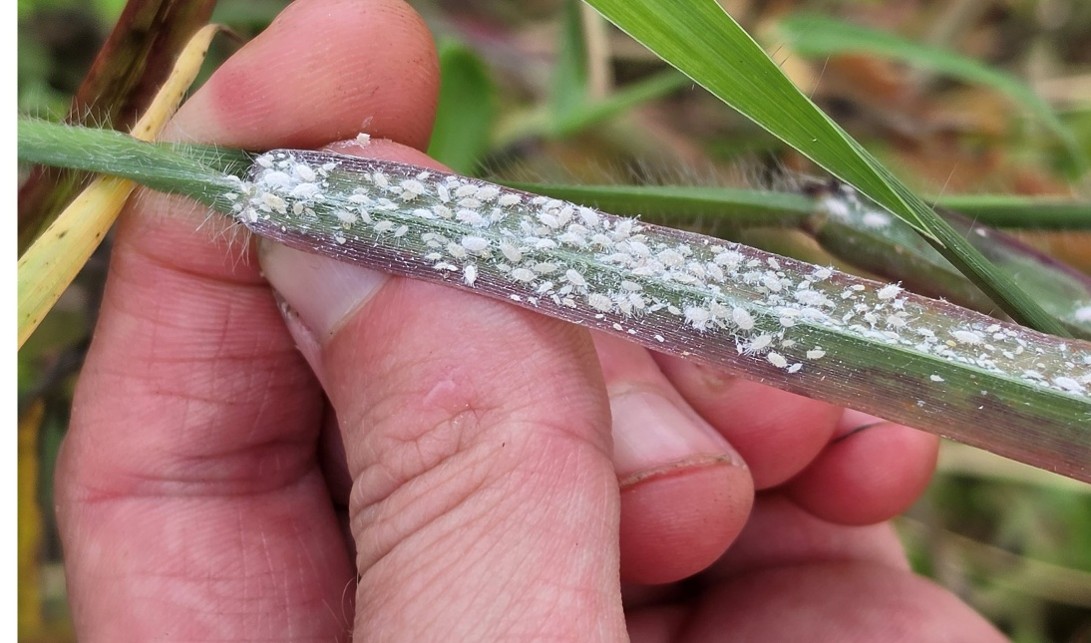 Pasture Mealybugs feed on plant sap, stressing grasses and causing symptoms that resemble drought or nutrient deficiency, including leaf yellowing, red or purple discoloration, stunting, poor root growth, and dieback. In Florida, limpograss has shown the most severe damage, though infestations also occur in bahiagrass, bermudagrass, crabgrass and others. Heavy infestations can quickly degrade pastures and allow weeds to invade.
An insecticide has been approved to help eradicate the Pasture Mealybug. Sefina® Inscalis® insecticide, EPA Reg. No. 7969-391 has been approved for the suppression of Pasture Mealybug in Alabama, Florida, Georgia, Louisiana, Mississippi, and Oklahoma. Sefina® and Inscalis® are registered trademarks of BASF.
This recommendation is for suppression of Pasture Mealybug (Heliococcus summervillei) in:
● grass forage, fodder, and hay (including grass grown for seed)
● non-grass animal feeds (grown for forage, fodder, hay, seed, and straw)
● mixed stands with grass forage, fodder, hay
All applicable directions, restrictions, precautions, and Conditions of Sale and Warranty on the EPA registered container label are to be followed.
If there is a suspected case of Pasture Mealybug, take precautionary measures such as:
- Report suspected infestations as soon as possible to local UF/IFAS Extension office or to the Florida Department of Agriculture and Consumer Services (FDACS), Division of Plant Industry.
- Where Pasture Mealybug is present, reduce excessive forage growth by harvesting hay or haylage. Additional research is needed, but reducing heavy thatch and overgrowth may prove beneficial.
- Use caution when moving between affected sites, as Mealybugs can spread on clothing, footwear, equipment, vehicles, and possibly animals. Clean and inspect items before entering other properties.
The Pasture Mealybug was first identified in May 2026 on limpograss in South Florida, with additional infestations now confirmed across multiple counties as surveys continue to assess its spread. Previously, the Pasture Mealybug was linked to pasture dieback in Australia and was first found in the United States in Texas in 2025 and has also been reported in Louisiana.
For more information on the Pasture Mealybug, click here.