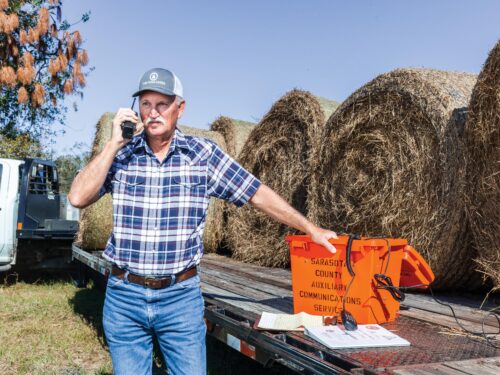
Firebreaks are one of the most effective ways to protect your ranch from wildfires, according to Sarasota cattle rancher and disaster response veteran Chuck Johnston.
“If I had any one tool that I’d tell ranchers, make sure your firebreaks are in good shape so you can be proactive rather than reactive,” says Johnston, who has held leadership roles with the Sarasota Fire Department and the Florida Division of Forestry.
Most often used for prescribed burning, firebreaks are strategic gaps in vegetation that divide land into smaller sections to slow or stop the spread of fire. Even if you don’t conduct prescribed burns, Johnston strongly encourages installing them to prevent a wildfire from sweeping across your entire property. Well-maintained firebreaks can create refuge zones where livestock can shelter in place and provide firefighters with safer areas to work.
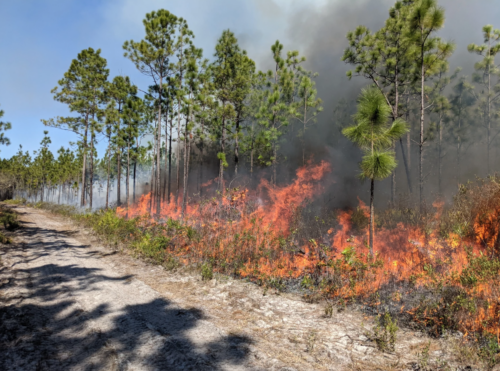
For ranchers, a fast-moving wildfire can mean lost livestock, destroyed infrastructure and months—or even years—of recovery.
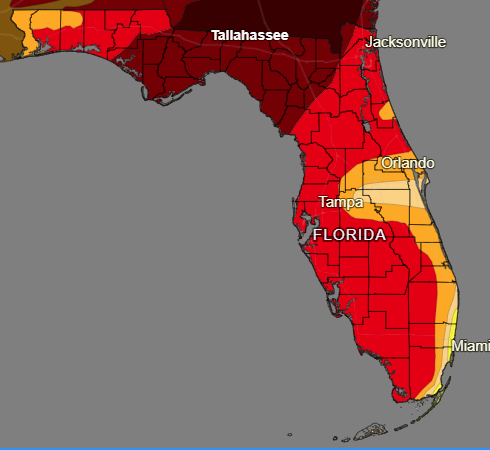
The urgency is real: since January, nearly 2,000 wildfires have burned more than 130,000 acres statewide as Florida faces one of its worst droughts in decades.
Even though the rainy season is upon us, typical summer storms will not reduce your property’s fire risk. Florida needs several months of sustained, above-average rainfall to return to normal conditions.
How else can you prepare?
Know your risk: The U.S. Drought Monitor shows current dryness levels, while the Active Florida Wildfire Map lets you track fires in real time so you can act quickly.
Maintain defensible space: Keep areas closest to structures clear of combustible materials like vegetation, dry leaves, branches, mulch, outdoor furniture and trash containers.
Make a fire plan: Identify safe zones for livestock if evacuation isn’t possible, gather essential records and emergency contacts, and map nearby water sources and evacuation routes.
Proactive planning now is one of the most important steps you can take to protect your land, livestock and livelihood.